The Conservatorium, since January 2026 the Mandarin Oriental Conservatorium, sits on the corner of the Museumplein in a building that started life as a bank and spent a quarter of a century as a music school. For a private guide it is the easiest museum address in Amsterdam: the Van Gogh Museum is a few steps along the Paulus Potterstraat, the Rijksmuseum six minutes on foot and the Concertgebouw five. We start from the hotel entrance, and for the canal ring or the countryside we bring a car.

The building went up between 1899 and 1901 as the head office of the Rijkspostspaarbank, the state postal savings bank, where ordinary Dutch families kept their savings. It was designed by the government architect Daniël Knuttel in an eclectic, largely neo-Renaissance style, and inside he lined the corridors and stairs with Art Nouveau tile tableaux that are still there today. It is a national monument.


The bank moved out in 1977. From 1985 to 2008 the building belonged to the Sweelinck Conservatorium, and for more than twenty years the corridors that once held savings books were full of students practising scales. When the music school left, the Italian designer Piero Lissoni turned it into a hotel, covering the old inner courtyard with a glass and steel roof. It opened in 2011, and in January 2026 it became part of Mandarin Oriental.


Look out for the tiles on your way through the building. They are a rare surviving Art Nouveau interior, and they tell you more about the confidence of Amsterdam in 1900 than any museum label.
A short walk into the Vondelpark stands an eight-metre concrete sculpture that most visitors walk straight past. It is Figure découpée, l’Oiseau, designed by Pablo Picasso and made in sandblasted concrete by the Norwegian artist Carl Nesjar, given to the city in 1965 for the park’s hundredth birthday. Picasso gave it as a gesture of friendship to Willem Sandberg, the former director of the Stedelijk Museum, on the condition that it would always stay in public space. He meant it as a bird. Amsterdammers call it the fish.
Closer still is the Concertgebouw, which in 1983 was found to be sinking on rotting wooden foundations. Between 1985 and 1988 it was given new foundations from below while concerts carried on above, and the architect Pi de Bruijn added the glass wing you see on the side today.
The old centre is further than it looks on a map. Dam Square is half an hour on foot and the Anne Frank House a little more, so for those we use the tram or a car, which takes about fifteen to twenty minutes.
Your guide can string several of these together in a single walk. They appear on the Private Van Gogh Museum Tour, and the Private Rijksmuseum Tour passes close by.
Six more we would suggest from the Museumplein. The Anne Frank and Jewish history tour and City Highlights both head north into the canal ring, and the architecture tour can begin with Knuttel’s bank before moving on to the Amsterdam School streets further south. The food tour is the best way to see how the city actually eats. Guide for a Day keeps the whole day open, and Zaanse Schans is the windmill trip by car.
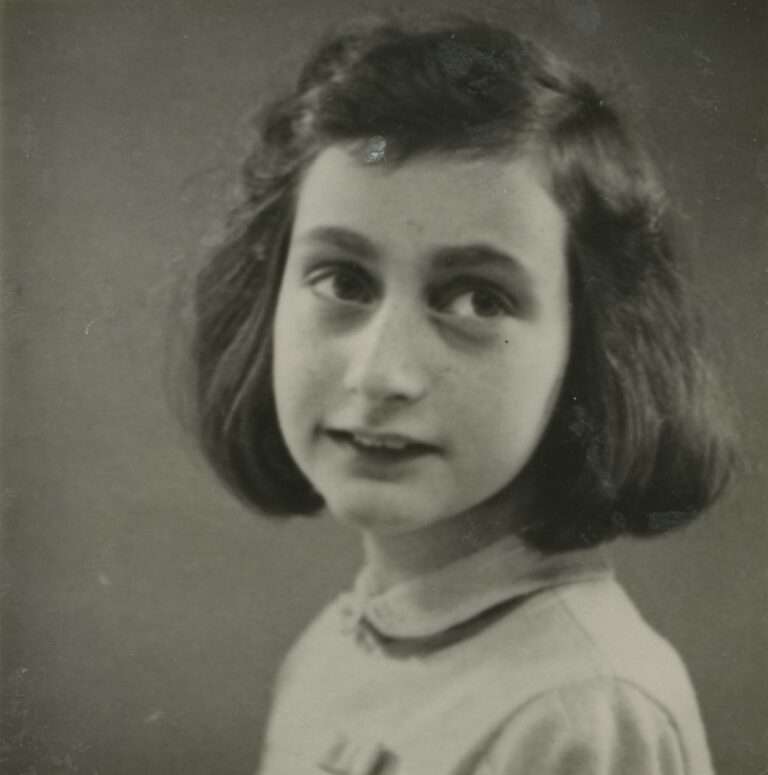 Private Anne Frank and Jewish History Walking TourFrom 515 euroView this tour
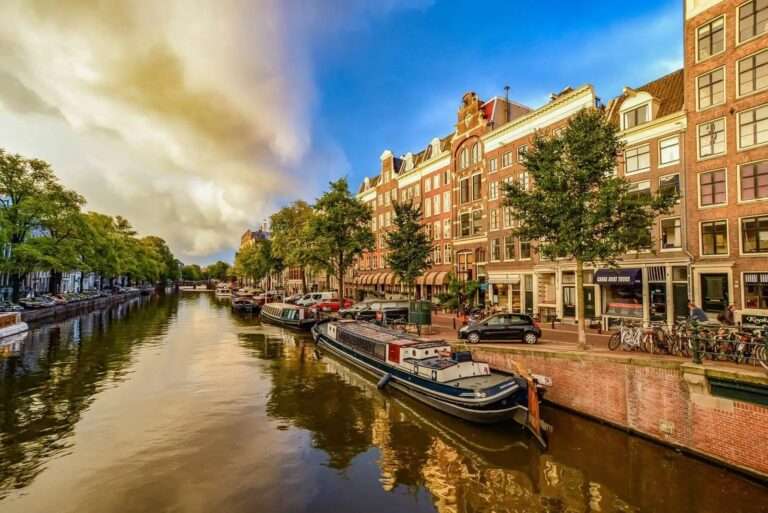 Amsterdam City Highlights Private TourFrom 400 euroView this tour
 Private Architecture Tour AmsterdamFrom 400 euroView this tour
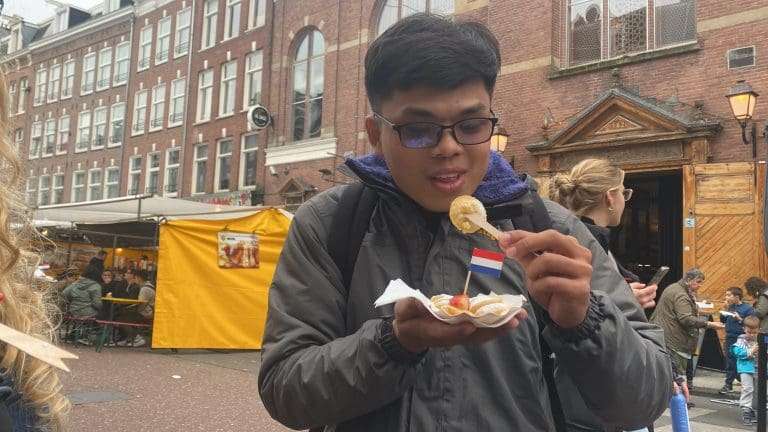 Private Dutch Food Tour, Eat Like a LocalFrom 445 euroView this tour
 Guide for a DayFrom 1,000 euroView this tour
 Private Zaanse Schans Windmill and Dutch Villages TourFrom 1,100 euroView this tour
See all our private tours from Amsterdam about Private Tours Amsterdam
The hotel sits just inside the ring road, which makes day trips unusually quick to start. Your guide arrives with a car and you are on the motorway within minutes, heading for Zaanse Schans, Keukenhof in tulip season, Haarlem, Delft and The Hague, or the castle at Muiderslot. The full range is on our private driving tours page.
The streets around the Museumplein carry trams and heavy traffic, so we agree the exact pick-up point with you and the hotel beforehand and confirm it with you the day before.
Most of our Conservatorium guests are here for the museums, so we match them with guides who know the collections rather than just the route. You deal with one person from your first message to the end of the trip, your clients receive a written itinerary before they fly, and we call them ourselves before each tour. Commission terms are on our travel advisor page.
The hotel’s concierge can also book with us directly for a guest.
Yes. Walking tours start at the hotel, whose main entrance is on the Paulus Potterstraat. For driving tours we agree the exact pick-up point with you and the hotel, because trams run on the surrounding streets, and confirm it the day before.
Almost. It is a few steps along the Paulus Potterstraat. Our private Van Gogh Museum tour can meet you in the lobby and walk you straight in.
Yes. It was built between 1899 and 1901 as the Rijkspostspaarbank, the state postal savings bank, and later housed the Sweelinck Conservatorium music school. The Art Nouveau tiles from the bank years are still in the corridors, and our architecture tour can start with them.
It is about half an hour on foot, or fifteen to twenty minutes by car or tram. For our Anne Frank and Jewish history tour we arrange the transport so you arrive in good time for your entry slot.
Yes. The concierge team can contact us on your behalf, or you can reach us yourself. We then confirm every detail with you in person.
Often, yes. Booking a few weeks ahead gives the widest choice, especially for museum tours in spring, but next-day tours are regularly possible. Use our contact page or give us a call.