It’s been 84 years since Anne Frank and her family went into hiding.
For many visitors, the story of Anne Frank is one of the most personal and emotional introductions to the history of the Second World War. Her diary has been read by millions around the world across generations, yet behind the words, there was a real young girl, living in a city that was slowly becoming more dangerous around her.
People often ask why Anne Frank had to hide, and how it became possible for a family to remain hidden away for more than two years in the middle of a busy European capital. The answer lies in a combination of circumstance, fear, hope, and the changing reality of Amsterdam during the Nazi occupation.
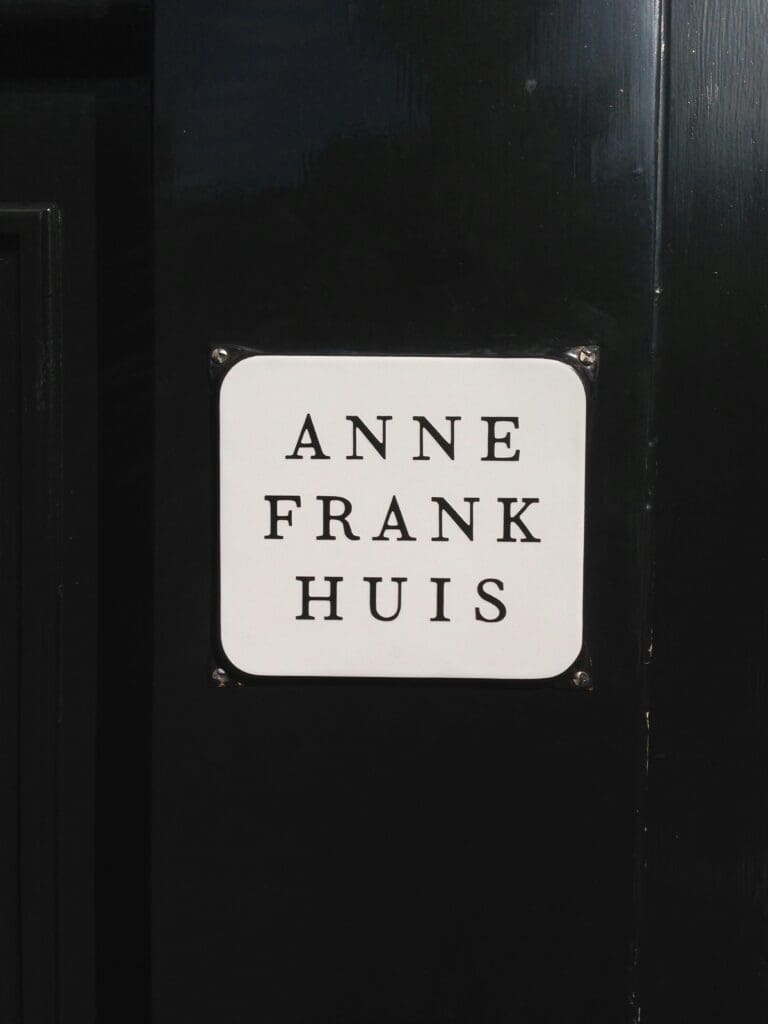
The short answer: Anne Frank had to go into hiding because the Nazis had begun deporting Jews from the occupied Netherlands. When her sister Margot received a call-up for a Nazi work camp in July 1942, the family hid in the Secret Annex at Prinsengracht 263, where they remained for 761 days. However, there is so much more to the story.
Anne Frank was born in Frankfurt, Germany, in 1929. As antisemitism and political violence grew under Adolf Hitler and the Nazi Party, Anne’s father, Otto Frank, recognised the increasing danger facing Jewish families in Germany.
In 1933, the Frank family moved to Amsterdam, hoping to build a safer life in the Netherlands. At the time, the Netherlands was seen by many as stable, tolerant and neutral. Amsterdam in particular had a long Jewish history and a reputation as an open and international city.
For several years, life improved. Anne attended school, made friends and grew up in the southern part of Amsterdam. Otto Frank established a business, and the family settled into daily life in the city.
But the situation changed dramatically in May 1940, when Nazi Germany invaded and occupied the Netherlands.
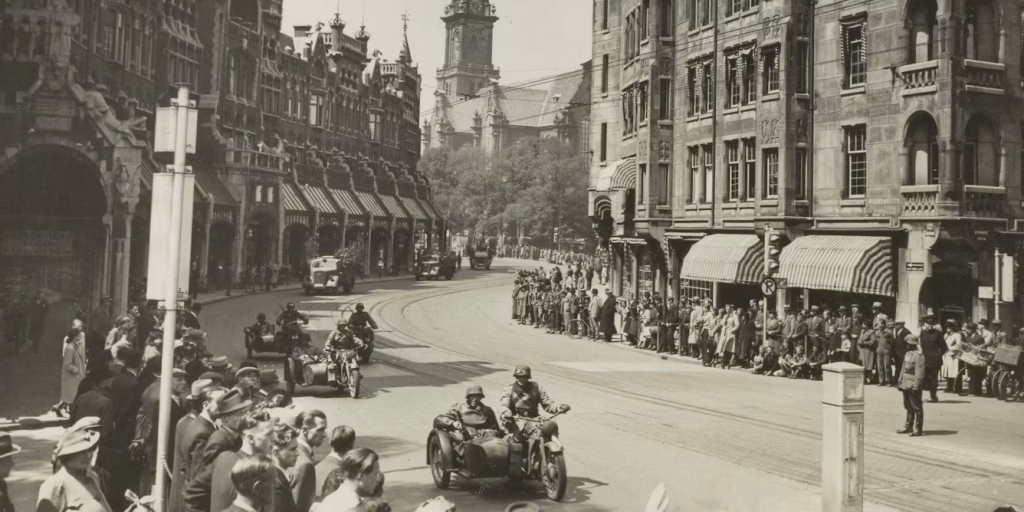
The German occupation gradually transformed everyday life in Amsterdam. Restrictions aimed at the Jewish population were introduced step by step. By 1942, deportations from the Netherlands had begun on a large scale.
For many Jewish families, including the Franks, it became increasingly clear that remaining visible was becoming extremely dangerous. Rumours spread about deportations and forced labour camps, though the full scale of what was happening was still not widely understood.
When Anne’s older sister Margot received a summons ordering her to report for deportation in July 1942, the Frank family decided they could no longer wait. On the morning of 6 July 1942, they left their home on Merwedeplein and moved into the hiding place Otto Frank had been quietly preparing for months.
The family went into hiding in rooms concealed behind Otto Frank’s business premises at Prinsengracht 263, on one of Amsterdam’s canals. Today, this space is known around the world as the Secret Annex.
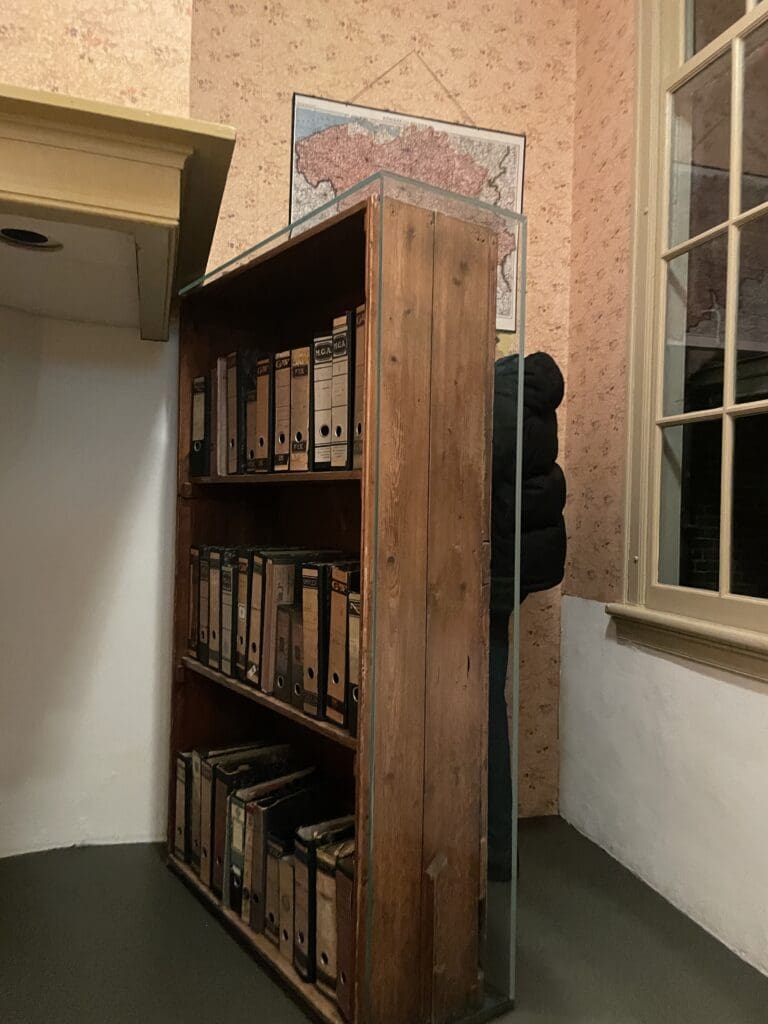
The hiding place was carefully concealed behind a movable bookcase and supported by a small group of helpers who brought food, news, and supplies despite the enormous risks involved. Assisting Jewish people in hiding could lead to imprisonment or worse. Anne, her parents Otto and Edith, her sister Margot, and four others (Hermann and Auguste van Pels, their son Peter, and Fritz Pfeffer) lived hidden there for 761 days, just over two years.
It is difficult to fully imagine the psychological strain of such a life. During the day, silence was essential. The people hiding could not walk freely, speak loudly, open curtains or even use water carelessly while workers were present below.
Outside, Amsterdam continued with daily life under occupation. Trams still moved through the streets, bicycles crossed bridges, and boats passed along the canals. Yet hidden behind one of those canal houses, eight people lived in constant uncertainty.
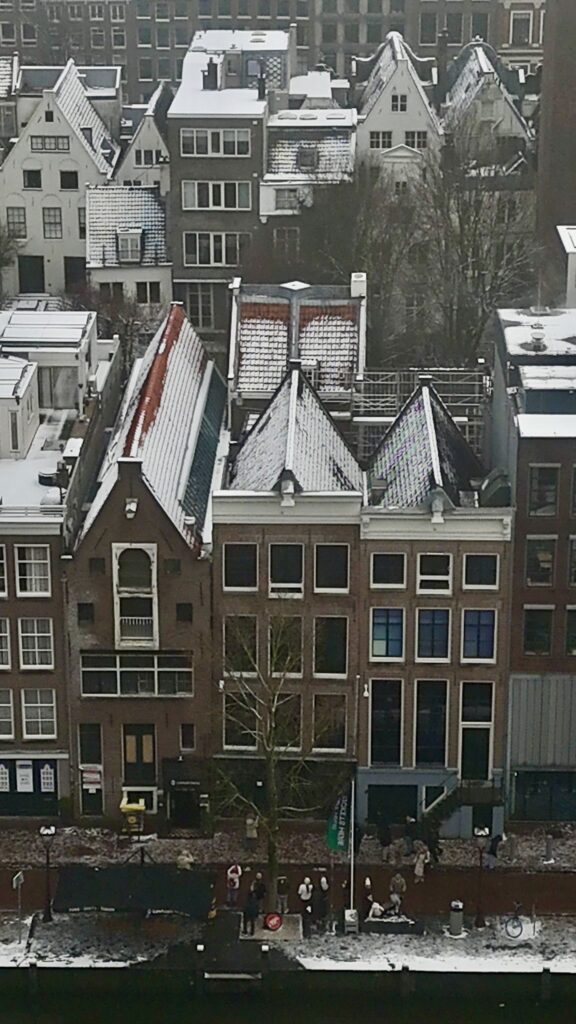
On 4 August 1944, after 761 days in hiding, the Secret Annex was discovered and everyone inside was arrested, along with two of the helpers. Despite decades of research, nobody knows for certain who, if anyone, betrayed them. Some researchers believe the discovery may not have been the result of betrayal at all, but of chance.
The eight people in hiding were deported, first to Westerbork and then on to Auschwitz. Anne and her sister Margot were later transferred to Bergen-Belsen, where both died in early 1945, only weeks before the camp was liberated. Anne was 15 years old. Her father Otto was the only one of the eight to survive the war, and it was he who published Anne’s diary in 1947.
Anne Frank’s diary remains so powerful partly because it does not read like distant history. It captures ordinary thoughts, frustrations, hopes and fears from a teenager trying to understand an extraordinary and frightening world, one which is very relevant to the current events today.
Through her writing, readers see not only the reality of persecution but also the humanity that existed within those confined rooms. Anne was a regular teenage girl who wrote about arguments, dreams, loneliness, humour and the future she still hoped to experience. Her words give personal context to events that can otherwise feel overwhelming in scale.
The only moving footage of Anne Frank, at her home in Merwedeplein.
Amsterdam itself also plays an important role in that story. The city’s canals, streets and neighbourhoods were not simply a backdrop, but part of the lived experience of occupation, resistance, fear and survival. Many visitors are often surprised by how close together these histories remain within the modern city.
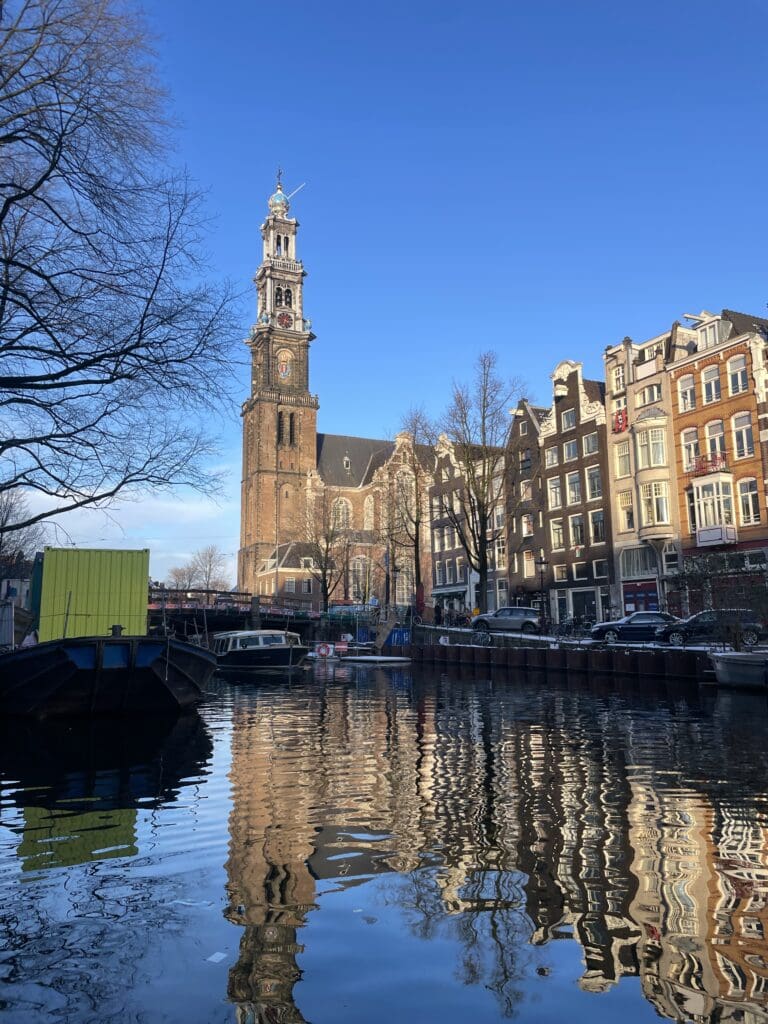
Today, the Anne Frank House receives well over a million visitors each year, making tickets extremely difficult to secure, particularly during busy periods and school holidays. To help visitors plan ahead, we created a simple calculator that shows the exact date and time (local to you) that tickets are released on the Anne Frank house ticket booking page. It will even check to see if there are any tickets left.
Before the Second World War, Amsterdam had one of the largest Jewish communities in Europe, with deep roots stretching back centuries. Jewish life contributed enormously to the culture, trade and character of the city. The occupation devastated that community. More than 75% of Dutch Jews were murdered during the Holocaust, one of the highest percentages in Western Europe.
Today, traces of this history can still be found throughout Amsterdam. Former Jewish neighbourhoods, memorial stones, synagogues, resistance sites and wartime buildings remain woven into the cityscape, often quietly and without spectacle. Understanding Anne Frank’s story also means understanding this wider history and the atmosphere of Amsterdam during those years.
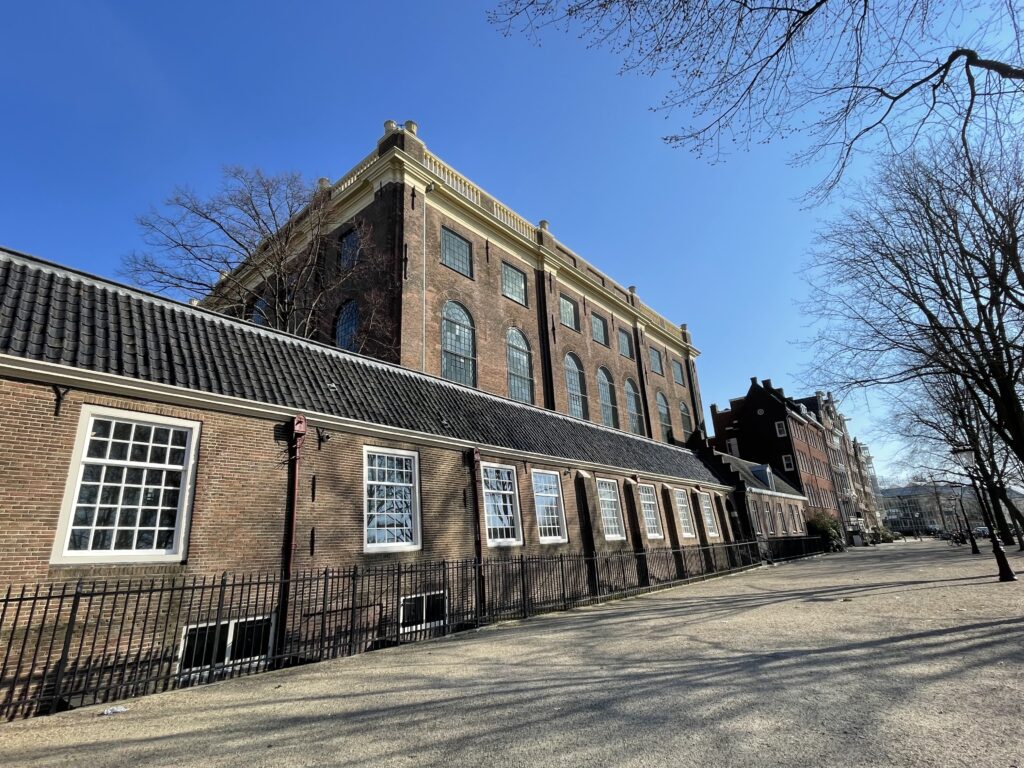
Visiting places connected to Anne Frank often leaves a lasting impression on travellers. For many, it becomes less about tourism and more about reflection, perspective and human connection.
At Amsterdam Experiences, our approach to these stories is always thoughtful and respectful. We believe it is important not only to explain the historical events themselves, but also to provide a balanced context about the city, the people who lived here, and the difficult day-to-day realities faced during the occupation.
Our private Anne Frank and Jewish history tour is designed to encourage conversation, understanding, and reflection, rather than sensationalise history. By walking through the streets where these events unfolded, visitors often gain a more personal understanding of how history shaped Amsterdam and the lives of those who lived through it, whilst also recognising how the themes and realities of that period still resonate in different ways around the world today.
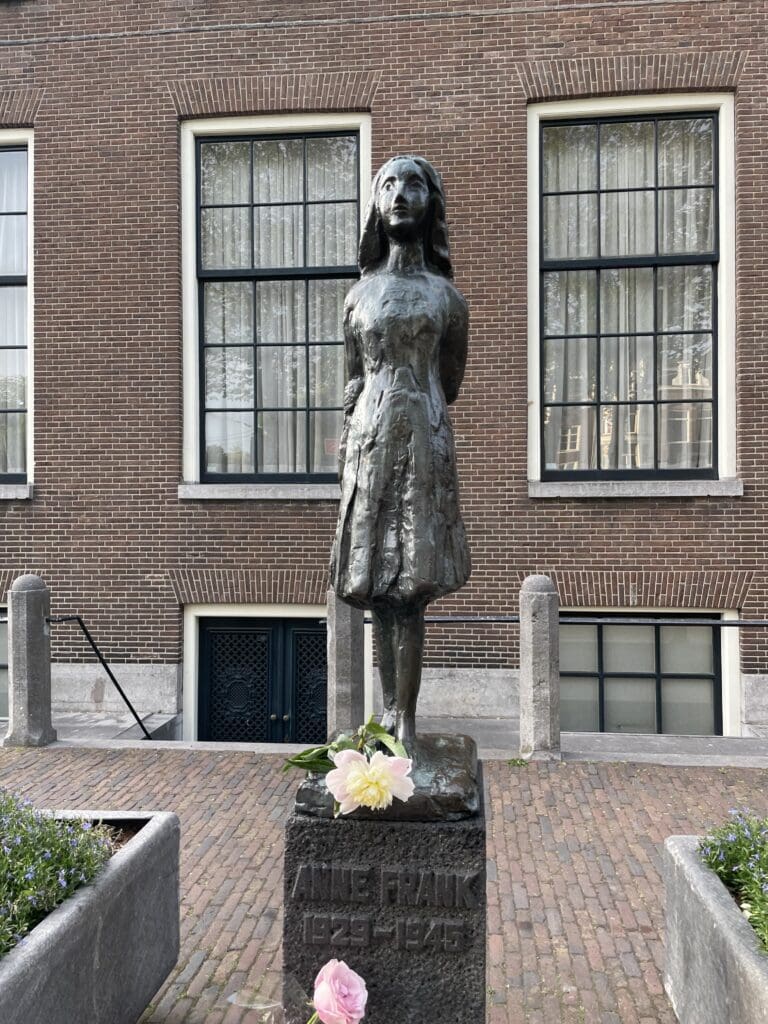
Would you like to experience this history in person? Join our Anne Frank’s Last Walk & Secret Annex VR Experience, available as a private tour or a small group tour. You will retrace the final walk Anne and her family took to their hiding place, then step inside the Secret Annex in virtual reality. And if you could not get Anne Frank House tickets in time, this is by far the best alternative.
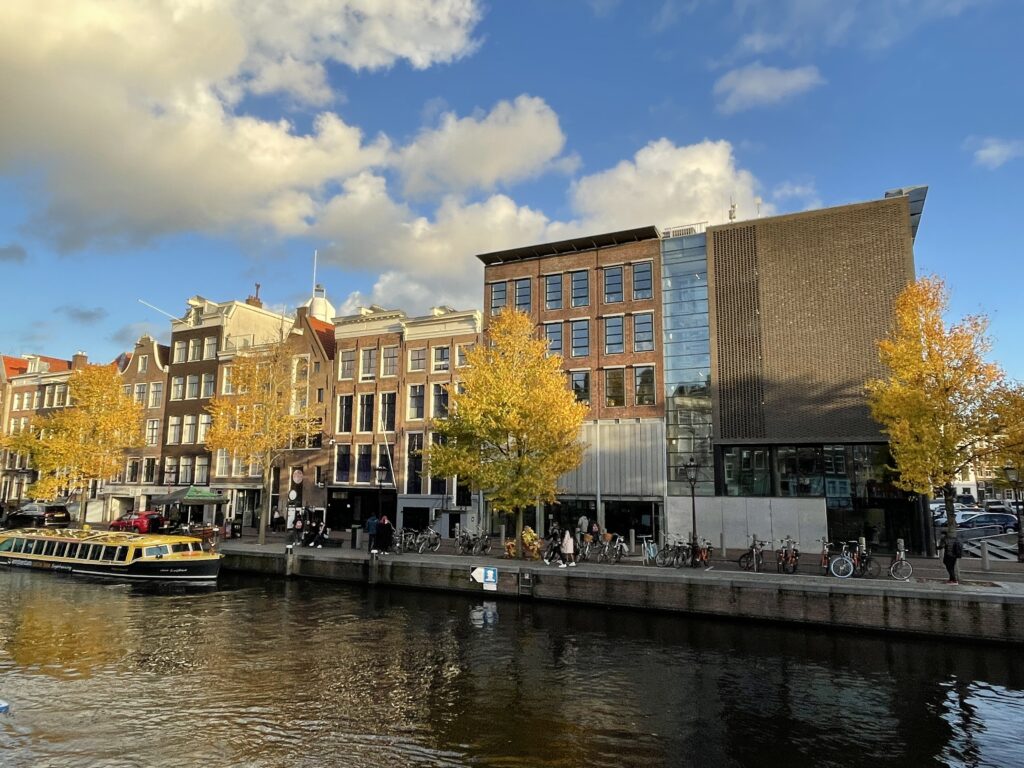
Want to walk where Anne Frank’s story happened? On our private Anne Frank walking tour in Amsterdam a guide takes you through the Jewish Quarter and the sites behind the hiding, with expert advice on how to get your Anne Frank House tickets. Prefer a small group? Step into the Secret Annex in virtual reality on the Anne Frank Last Walk small-group VR tour.
Anne Frank went into hiding on 6 July 1942, the day after her sister Margot received a call-up ordering her to report for a Nazi work camp. The family had been preparing a hiding place for months, but the summons forced them to move earlier than planned.
Anne spent 761 days, just over two years, in the Secret Annex, from 6 July 1942 until 4 August 1944, when the hiding place was discovered and everyone inside was arrested.
Eight people hid in the Secret Annex: Anne, her parents Otto and Edith Frank, her sister Margot, Hermann and Auguste van Pels with their son Peter, and the dentist Fritz Pfeffer.
Nobody knows for certain. Despite decades of investigations, no theory has ever been proven, and some researchers believe the raid may not have been the result of betrayal at all, but of a chance discovery.
Anne was 13 years old when the family went into hiding, and she turned 14 and 15 inside the Secret Annex. She died at Bergen-Belsen concentration camp in early 1945, aged 15.
Yes. The Secret Annex is part of the Anne Frank House museum at Prinsengracht 263, which welcomes well over a million visitors a year. Tickets sell out quickly, so plan ahead using the release-date calculator and ticket guide on amsterdamexperiences.nl.