Yes, Amsterdam is safe to visit. It ranked 4th safest capital city in the world (Berkshire Hathaway Travel Protection, 2025), violent crime against tourists is rare, and most visitors are surprised by how calm and relaxed the city feels day-to-day.
The short version:
- Pickpockets operate on trams 1, 2, 5 and 9 and around Centraal Station – keep your bag in front
- The Red Light District is crowded on weekend nights but not dangerous
- Violent crime against tourists is extremely rare
- Most neighbourhoods are safe to walk at night
- Cycling is safe once you understand how Dutch traffic works
Read on for the neighbourhood-by-neighbourhood detail, night safety, solo travel, and what we actually tell guests before every tour.
How Safe is Amsterdam in 2026?
Amsterdam is one of the safest major cities in Europe. In the 2025 Berkshire Hathaway Travel Protection rankings, it placed 4th among the world’s safest capital cities. The Netherlands also ranks in the top 3 countries globally for quality of life (Numbeo, 2025), which includes public safety, social trust, and infrastructure.
To put this in perspective: gun violence is essentially absent from everyday Dutch life. Knife crime is rare. When serious crime appears in Dutch news, it almost always involves specific criminal networks targeting each other – not tourists or residents going about their daily lives.
Crime statistics for Amsterdam are broadly comparable to other northern European cities. The main risk for visitors is opportunistic petty theft, and that is concentrated in a handful of specific spots.

What Our Guides Tell Every Guest
As a private tour company running tours across Amsterdam every week, we hear the same safety questions from guests before every tour. Here is what we actually tell them.
On pickpockets: They exist, mostly on the crowded trams and around Centraal Station. Keep your phone in a front pocket, your bag in front of you, and be alert when someone bumps into you or causes a distraction. In years of guiding, we have never had a guest robbed on a tour – but we have seen wallets taken from back pockets in a matter of seconds at the station.
On the Red Light District: It is chaotic on Friday and Saturday nights, mostly because of intoxicated tourists rather than any local threat. Visit in the afternoon or early evening and it is a genuinely fascinating, historically rich neighbourhood. We take guests there regularly with no issues at all.
On the bike lanes – actual danger number one: The real hazard in Amsterdam is not the Red Light District. It is not pickpockets. It is the bike lane – and we say this from experience, having dealt with more injuries from unexpected cyclist encounters than everything else on tour combined. Dutch cyclists move fast, have right of way, and are not going to slow down because you looked surprised.
One tip that sounds strange until you try it: at a zebra crossing, you have the right of way over cyclists. But you have to take it. Step out with confidence and keep walking – do not hesitate, do not stop, do not do that nervous little shuffle in the middle. The moment you freeze, the cyclist loses their read on you and that is when things go wrong. Commit to the crossing and they will adjust. It feels bold the first time. By day two, you will cross like a local.
For the gentlemen – a word about the canals: Amsterdam has approximately 1,500 cafés. Use one. If nature calls and the nearest canal looks convenient, it is not. Every year, hundreds of men fall into Amsterdam’s canals – most of them at night, many of them mid-stream. The canals are dark, cold, have almost no places to climb out, and the banks are considerably more slippery than they look. There is also a fine, though that tends to be the least of people’s concerns at that point. Find a bar, order something small, use the facilities. Amsterdam’s canals have seen many things over the past 400 years. They do not need to see this.
On walking at night: Perfectly fine in the canal belt, Jordaan, De Pijp, and Oud-West. Be sensible around Centraal Station late at night – as you would in any major train station anywhere in the world.
Amsterdam Neighbourhoods – What to Know
Centraal Station and surroundings – the busiest tourist bottleneck in the city and the highest concentration of pickpockets. Keep your bag close, especially on the station forecourt and while boarding trams.
Trams 1, 2, 5 and 9 – these run through the main tourist corridor from Centraal Station to the museum district. Crowded trams are the primary pickpocket location. Hold your bag in front of you.
The Red Light District (De Wallen) – not dangerous, but loud and chaotic late on weekends. Worth visiting, especially during the day or early evening. It is one of the oldest parts of Amsterdam and genuinely interesting.
Leidseplein and Rembrandtplein – lively nightlife squares, well-lit, generally safe. Unofficial taxis sometimes operate here; use a licensed cab or the GVB tram instead.
Jordaan, Oud-West, De Pijp – residential neighbourhoods, quiet and easy at all hours. These are where most locals live and where you will feel furthest from the tourist crush.
Bijlmer and Zuidoost – less visited by tourists and sometimes described as rougher, but still safe by international standards. If you are not going to the Johan Cruijff Arena you are unlikely to visit these areas.
Is Amsterdam Safe at Night?
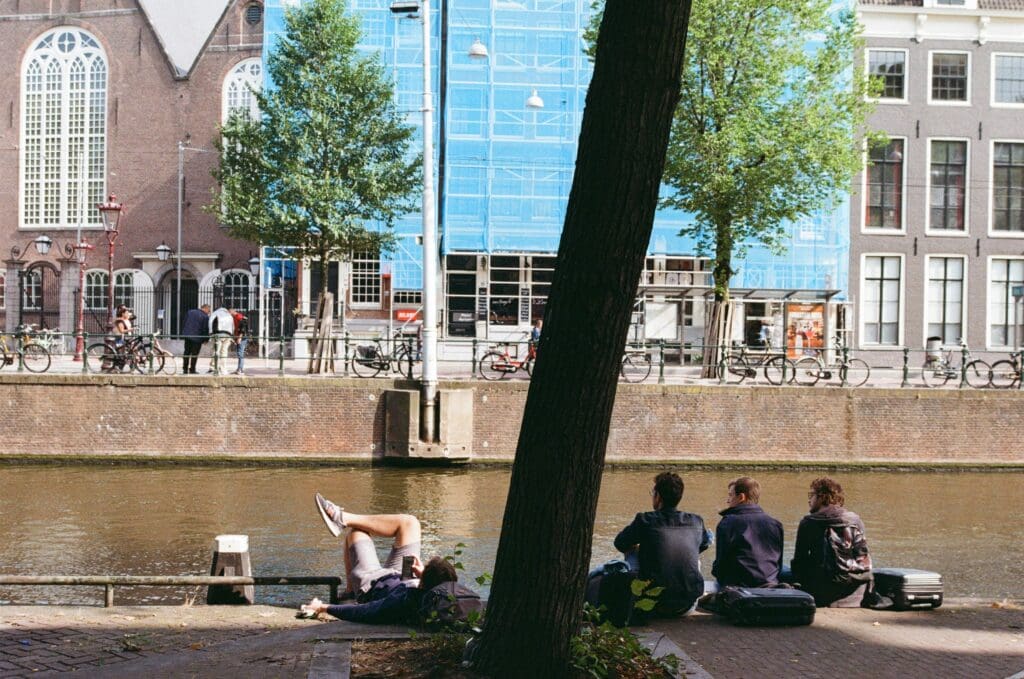
Yes, for most of the city. The canal belt, Jordaan, Leidseplein, and Rembrandtplein areas are busy and well-lit throughout the evening. Many of our guests stroll back to their hotels after late dinners with no issues at all.
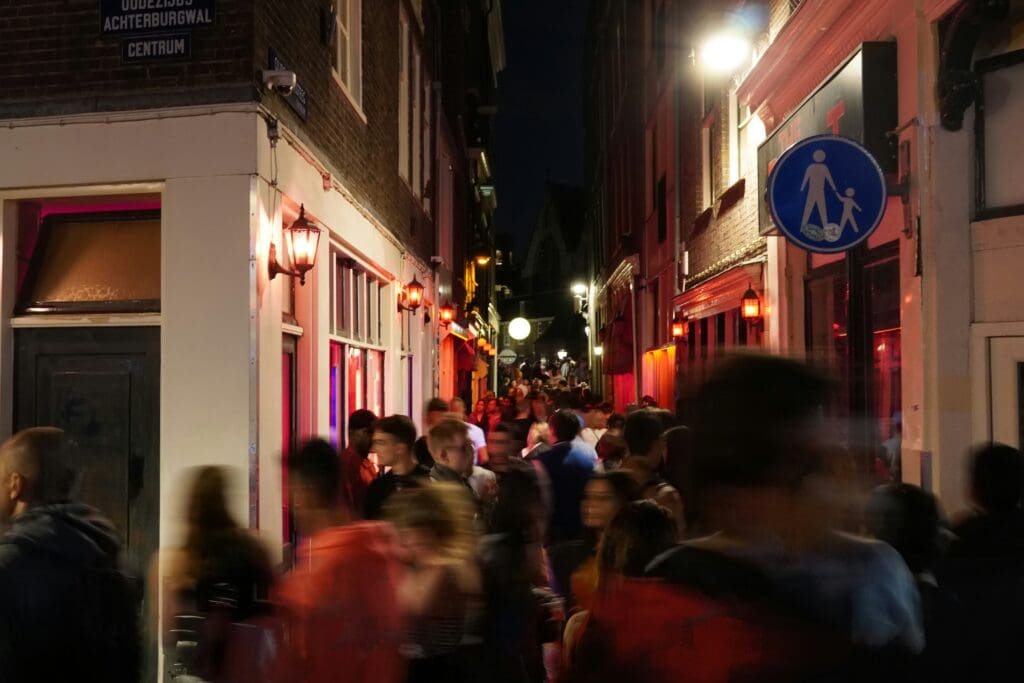
Late at night, around Centraal Station and in the Red Light District, the atmosphere gets more chaotic – mostly due to intoxicated groups rather than any real threat. If you prefer calm, take the GVB tram rather than walking through. Night buses run until public transport resumes in the early hours.
One thing that surprises guests: couples and families are out late in Amsterdam. It is not a city where streets empty at 10pm. Life is lived outside here, and that public presence makes the city feel safe even at night.
Is Amsterdam Safe for Solo Female Travellers?
Amsterdam is consistently rated one of the safest European cities for solo female travellers. Street harassment is uncommon. Most women report feeling comfortable walking alone in the evening in both tourist and residential areas.
The usual precautions apply: trust your instincts, avoid unlit canal paths very late at night, and use the GVB tram network rather than walking alone in unfamiliar areas after midnight. The city is compact and well-connected, so getting back to your accommodation by tram is easy from almost anywhere.
Is It Safe to Cycle in Amsterdam?
Yes, with a short learning curve. Amsterdam has hundreds of kilometres of dedicated cycle lanes and cycling is genuinely the easiest, fastest way to get around. The risks are almost entirely from not knowing the rules rather than from any danger in the city itself.
Key things to know before you get on a bike:
- Red-painted lanes are cycle lanes. Do not walk on them, even just to cross.
- Always look both ways at junctions – cyclists come from multiple directions.
- Rent from a reputable shop and get a bike with a bell and two working locks.
- Avoid the busiest streets around Centraal Station during peak hours until you are comfortable with the flow.
Most guests who try cycling are converted within the first half hour. It is the best way to feel like a local.
Why Dutch Cities Feel So Safe
A few things make Amsterdam structurally different from many capital cities.
Design. Amsterdam is built for people, not cars. Quiet residential streets, extensive cycling infrastructure, and parks and squares surrounded by homes and cafés mean there are eyes on the street at most hours of the day.
Social trust. The Netherlands ranks highly for trust in public institutions – healthcare, schools, police, local councils. When people feel supported by systems that work, tension and social conflict are lower. You notice this in the small things: open windows at ground level, children cycling to school alone, neighbours chatting in the street.
Gun laws. The Netherlands has extremely strict firearms legislation. Gun violence is essentially absent from everyday Dutch life, which makes a measurable difference to the overall atmosphere of the city.
What Guests Tell Us After Their Tour
On the first morning, guests often ask about safety, about the cyclists, about where to be careful. By the second or third day, they are cycling through the Jordaan or sitting by the canals with a coffee saying it just feels peaceful here.
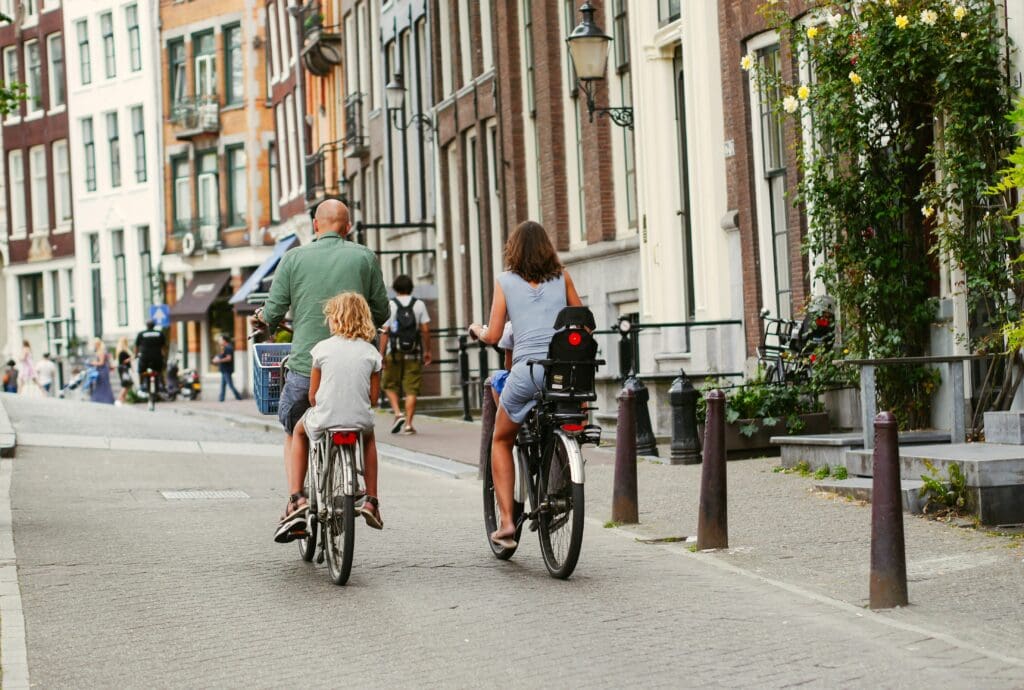
That is what safety looks like in Amsterdam. It is quiet and ordinary. You see parents with sleeping toddlers on cargo bikes, friends cycling home after dinner, and neighbours with their front doors open on warm evenings. Life in Amsterdam is lived very much in public, and that is exactly what makes it so easy to enjoy.
Explore Amsterdam With a Local Guide
If you are planning a trip to Amsterdam and want to experience the city the way locals do, we offer private tours and small group tours through the neighbourhoods, canals, and hidden corners that most visitors never find. Our guides know this city inside out – and we are always happy to answer questions about safety, cycling, or the best areas to stay before you arrive. Get in touch.
Frequently Asked Questions
Is Amsterdam safe to visit in 2026?
Yes. Amsterdam ranked 4th safest capital city in the world in 2025 (Berkshire Hathaway Travel Protection) and that rating has been consistent over several years. There is no significant change in 2026. The main risks remain petty theft and pickpocketing in tourist-heavy areas, particularly trams 1, 2, 5 and 9 and Centraal Station.
Is Amsterdam safe for tourists?
Yes. Violent crime against tourists is rare. The primary risk is pickpocketing in crowded spots: trams 1, 2, 5 and 9, Centraal Station, and busy museum queues. Keeping your bag in front of you and your phone in a front pocket is sufficient for most visitors.
Which areas of Amsterdam should I avoid?
Amsterdam has no genuinely dangerous neighbourhoods by international standards. The area around Centraal Station has the highest concentration of pickpockets. The Red Light District can feel overwhelming late on weekend nights due to crowds, but it is not dangerous. Most residential areas outside the tourist centre are quiet at all hours.
Is Amsterdam safe at night?
Yes, for most of the city. The canal belt, Jordaan, De Pijp, Leidseplein, and Rembrandtplein are busy and well-lit throughout the evening. Around Centraal Station and in the Red Light District late at night, it gets chaotic but not dangerous. Using the GVB tram is advisable after midnight.
Is Amsterdam safe for solo female travellers?
Amsterdam is one of the safest European cities for solo female travellers. Street harassment is uncommon. Most women feel comfortable walking alone in the evening in both tourist and residential areas. The usual precautions apply: trust your instincts, avoid unlit areas late at night, and use licensed taxis or the GVB tram network.
Is pickpocketing bad in Amsterdam?
Pickpocketing is the most common crime affecting tourists. The highest-risk spots are trams 1, 2, 5 and 9 near Centraal Station, crowded museum queues, and outdoor markets. Keep your phone in a front pocket, carry a copy rather than your original passport, and stay alert when someone bumps into you or causes a distraction.
Is cycling in Amsterdam safe for tourists?
Yes, with some adjustment. Amsterdam has extensive, well-maintained cycle lanes. The biggest hazard is not knowing the rules: Dutch cyclists move fast and have priority. Stay off the red-painted cycle lanes when on foot, look both ways at junctions, and avoid the busiest streets around Centraal Station until you are comfortable.
Is the Red Light District dangerous?
No. The Red Light District (De Wallen) is a historic neighbourhood and one of Amsterdam’s most visited areas. It gets very crowded and noisy on Friday and Saturday nights, mostly due to intoxicated tourists rather than any local threat. Visiting during the day or early evening is completely safe and much more enjoyable.
Staying Safe in Amsterdam’s Summer Crowds
Amsterdam is at its busiest between June and August, and the one safety issue that genuinely rises with the crowds is pickpocketing. The hotspots are predictable: Centraal Station and its platforms, the packed 2 and 12 trams, Damrak, Dam Square, the Albert Cuyp Market, and the crowded bridges around the canal belt. Pickpockets target distracted people — those taking photos, checking maps, or queuing. Keep your phone and wallet in a front or inside pocket rather than a back pocket or open tote, carry a bag that zips fully closed, and never leave a phone lying on a café terrace table. With those few habits, even peak-season Amsterdam stays a relaxed, safe city to explore.