Forget about the 25th of December, the real excitement around the Winter holiday season for the Dutchies is around the 5th of December. As a tradition in the Netherlands that can be traced back to 343 AD, Sinterklaas is a legendary Dutch character certainly worth knowing about! You’ll also perhaps have heard something about the controversies surrounding the ‘Zwarte Piet’ characters. So read on to get familiar with the most anticipated and often divisive event of the year!
Sinterklaas is celebrated on the evening of 5 December, known as Sinterklaasavond (Saint Nicholas’ Eve), and on the morning of 6 December. Sinterklaas first arrives in the Netherlands by steamboat in mid-November, around three weeks earlier, when his national arrival (the intocht) is broadcast live on Dutch television.
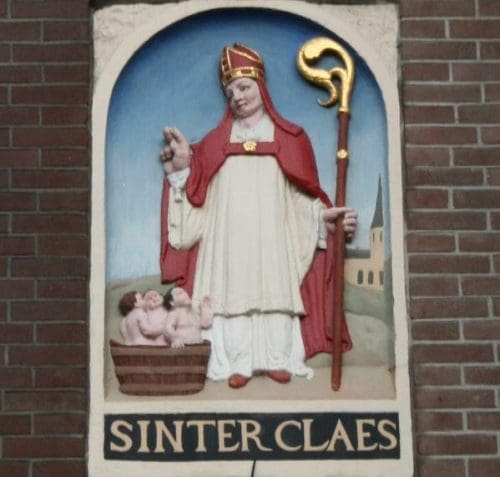
Main guy sound familiar? The name ‘Santa Claus’ came from Sinterklaas: the authentic legend of wintertime celebrations. Dressed in striking red robes, with a long white beard and silky locks to match, Sinterklaas leads a procession through Dutch towns each year. Sinterklaas’ arrival is often by boat, or even astride his white horse Ozosnel (oh so fast), and involves giving out sweets and small gifts to the children who gather to watch their arrival. Yes, it’s as extra as it sounds. Adored by children and adults alike, the traditions and celebrations surrounding Sinterklaas’ arrival are equally as good fun.
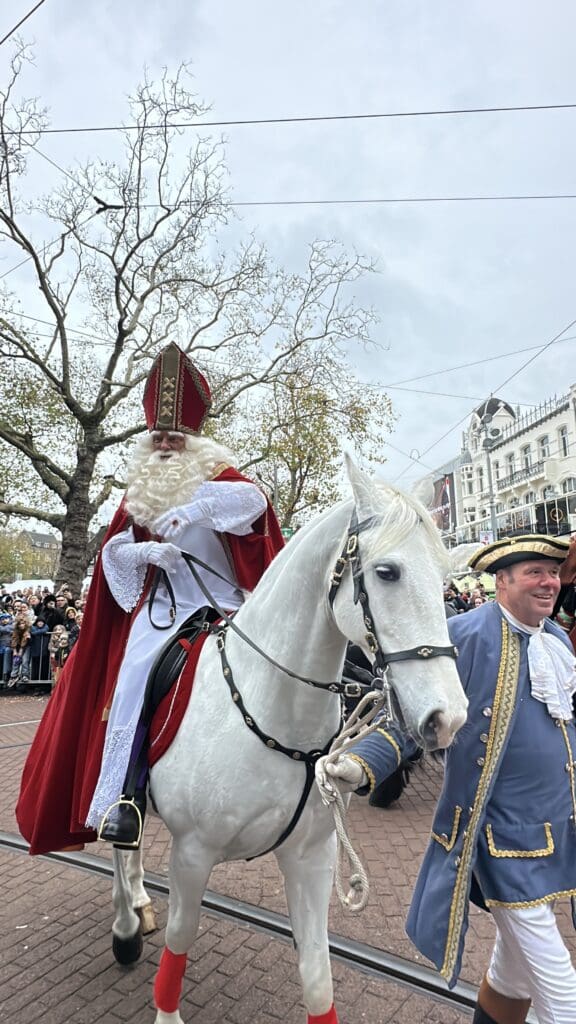
The party really starts on the second Saturday of November when Sinterklaas arrives in the Netherlands after a long journey from Madrid. (Exact reasons as to why Sinterklaas arrives from Spain is a little unclear, especially given the difficulty he would have in travelling by boat from Madrid!)
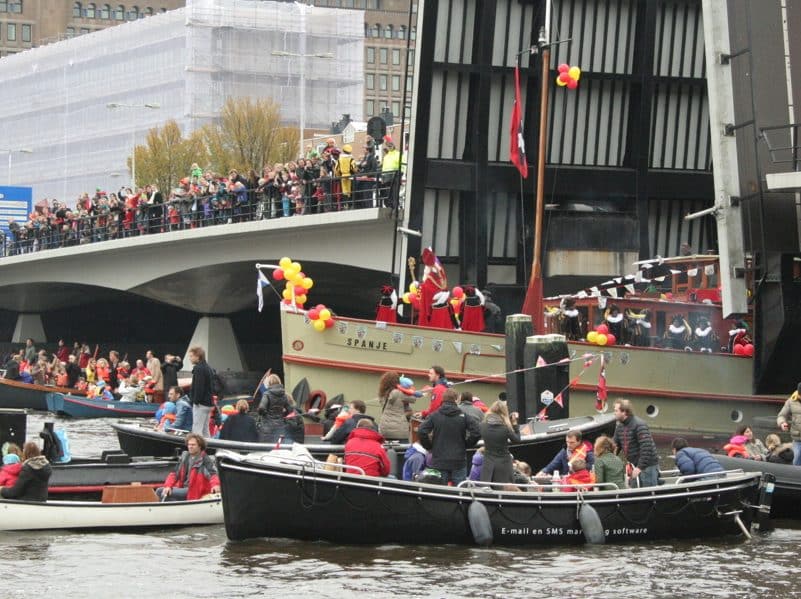
Amsterdam is host to the largest Sint Nicolaas parade in the world, with up to 400,000 spectators lining the canals each year! Sinterklaas sails into the city surrounded by impressive floats blaring out music via the Amstel river, to be then welcomed by the Mayor of Amsterdam themselves. FYI: Sinterklaas’ arrival in Amsterdam takes place in mid-November, but the exact date varies each year.
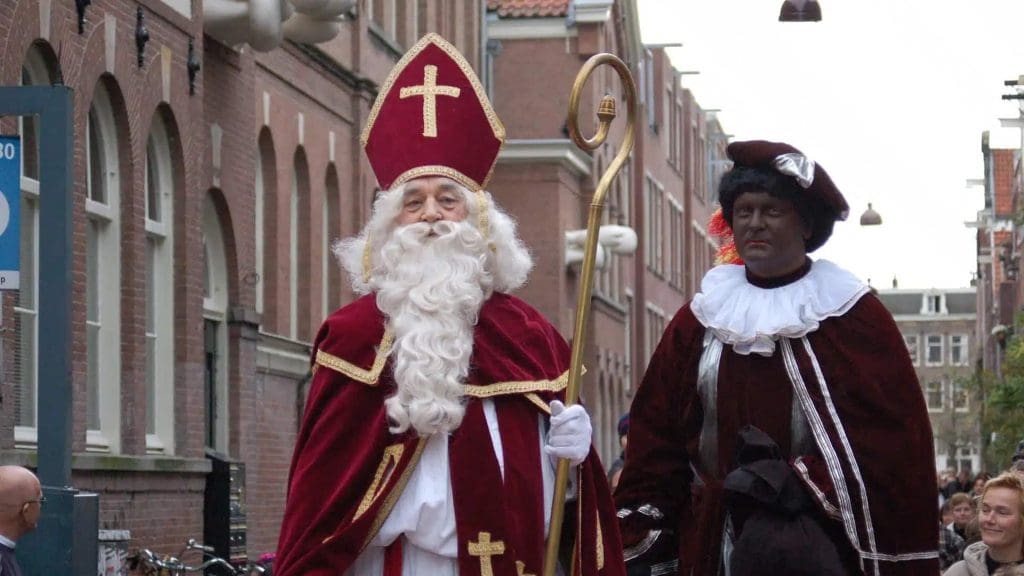
Sinterklaas travels traditionally with his servants, called ‘Zwarte Pieten’ (‘Black Peters’), who jovially hand out sweets and traditional cinnamon pepernoten biscuits. Since the 1960s, the Zwarte Pieten have been subject to controversy due to the use of blackface, black makeup worn by white people that plays on stereotypical and discriminatory depictions of black people. In Amsterdam’s 2018 Sinterklaas parade, the traditional ‘Zwarte Pieten’ were replaced by Schoorsteenpieten (‘chimney Peters’). But more on this later…
Now Sinterklaas is officially in town, children leave out their shoes before bedtime each night. In their shoes, they leave their wish list for Sinterklaas, and that often goes together with a drawing for Sint and Piet or a carrot for Ozosnel, the horse of Sinterklaas. They hope that Piet might have delivered gifts through the chimney to those who have been good by the morning!
These gifts are often chocolates or biscuits in the shape of the first letter of their name. On ‘sinterklaasavond’, the evening of the 5th of December, Sint leaves a hefty sack of presents before he heads back to sunny Spain! Poems, nowadays often written in more of a light-hearted ‘roast’ style, are anonymously written for everyone attending the gathering and are read aloud, songs are sung, and hot chocolates sipped!

The character of Zwarte Piet, Sinterklaas’ helpers, has been a controversial subject for decades owing to the use of blackface. Many Dutch people grew up with Zwarte Piet, and have fond memories of the character that many don’t feel are in any way racist.
But no matter your personal feelings towards the character of Piet, the implications and colonial history behind the traditional portrayal of Zwarte Piet are undeniable. While the most loved characteristics of the Pieten have remained unchanged, like their cheerfulness and supply of pepernoten, adaptations to the appearance of Zwarte Piet have been made.
Piet now appears with light streaks of soot on their face from coming down the chimney with gifts, rather than with traditional blackface makeup. At least, this is the case in bigger Dutch cities: controversially, in some rural parts of the country, you can still encounter the traditional characterisation of Zwarte Piet.

If Sinterklaas has inspired you to discover more of Amsterdam’s traditions and hidden stories, our Amsterdam City Highlights private tour weaves local customs, folklore and everyday Dutch life into an experience you will not find in any guidebook.
Sinterklaas is a traditional Dutch and Belgian holiday celebrated on the evening of 5 December (Sinterklaasavond) and the morning of 6 December. Based on the legend of Saint Nicholas, Sinterklaas arrives in the Netherlands by steamboat from Spain in mid-November and travels the country by horse delivering gifts. Children leave their shoes by the fireplace or radiator to be filled overnight with small gifts and traditional sweets.
Sinterklaas officially arrives in the Netherlands in mid-November each year, with the date varying slightly. His arrival by boat is broadcast live on national television and celebrated with large parades in cities throughout the country. Amsterdam typically hosts one of the bigger arrival celebrations. The season culminates on 5 December (Pakjesavond: gift evening), which is when families exchange presents.
Sinterklaas is the original Dutch figure that, via Dutch immigrants to America, eventually became Santa Claus. However, they differ significantly. Sinterklaas wears red bishop’s robes, carries a staff, and arrives by boat from Spain rather than from the North Pole. He brings gifts on 5 December rather than 25 December. The commercialised American Santa Claus is a distinct figure that evolved separately from the Dutch original.
Several traditional foods are associated with Sinterklaas. Pepernoten are small, hard spiced biscuits (similar to gingerbread) thrown by the handful during parades. Kruidnoten are the crunchy, small round version most commonly sold in bags. Speculaas are thin spiced biscuits often shaped like Sinterklaas himself. Chocolate letters (a chocolate initial) are given to children as personal gifts, and marzipan figures are traditional in many households.
Yes, the arrival of Sinterklaas in Amsterdam is a public event that tourists are welcome to watch. The arrival parade (intocht) takes place in mid-November along the IJ waterfront and through the city streets. It is a family-friendly event with large crowds. Arrive early to secure a good viewing spot. The full parade route and date are published each year by the city of Amsterdam.
The core traditions are the same throughout the Netherlands, but local customs vary. Some cities have particularly famous Sinterklaas arrivals: Groningen, Rotterdam, and Amsterdam all host large celebrations. The gift-giving tradition on 5 December is universal. Sinterklaas is celebrated more prominently than Christmas in many Dutch households, particularly for young children, as it is the main gift-giving occasion in the Dutch calendar.