In the digital age, it’s easier than ever to fall in love with a place before you’ve even set foot there. The Netherlands, with its iconic windmills, vibrant tulip fields, and picturesque canals, is no exception. However, as beautiful as our country truly is, more and more visitors are arriving with unrealistic expectations, largely shaped by the growing prevalence of fake AI-generated and heavily photoshopped images online. The famous Holland image on the top of this article is an example of a combination of two pictures made with Photoshop.
At Amsterdam Experiences, we’ve noticed an increase in requests and questions from travellers wanting to visit locations that don’t actually exist. These aren’t hidden gems or lesser-known spots, they’re fantasy locations that are being shared widely across social media and travel platforms. These images often include a landmark or a feature from a real location, such as a windmill or church, and place it in a computer generated landscape.
One of the most common misconceptions we’ve encountered is regarding fake images of windmills surrounded by tulips. In particular, the Windmills of Kinderdijk, a UNESCO World Heritage site known for its historic beauty and the heritage village of Zaanse Schans. Heavily edited images often show these windmills standing next to vast tulip fields in full bloom. In reality, the soil in both of these locations isn’t suitable for growing tulips, so these colourful vistas simply don’t exist.
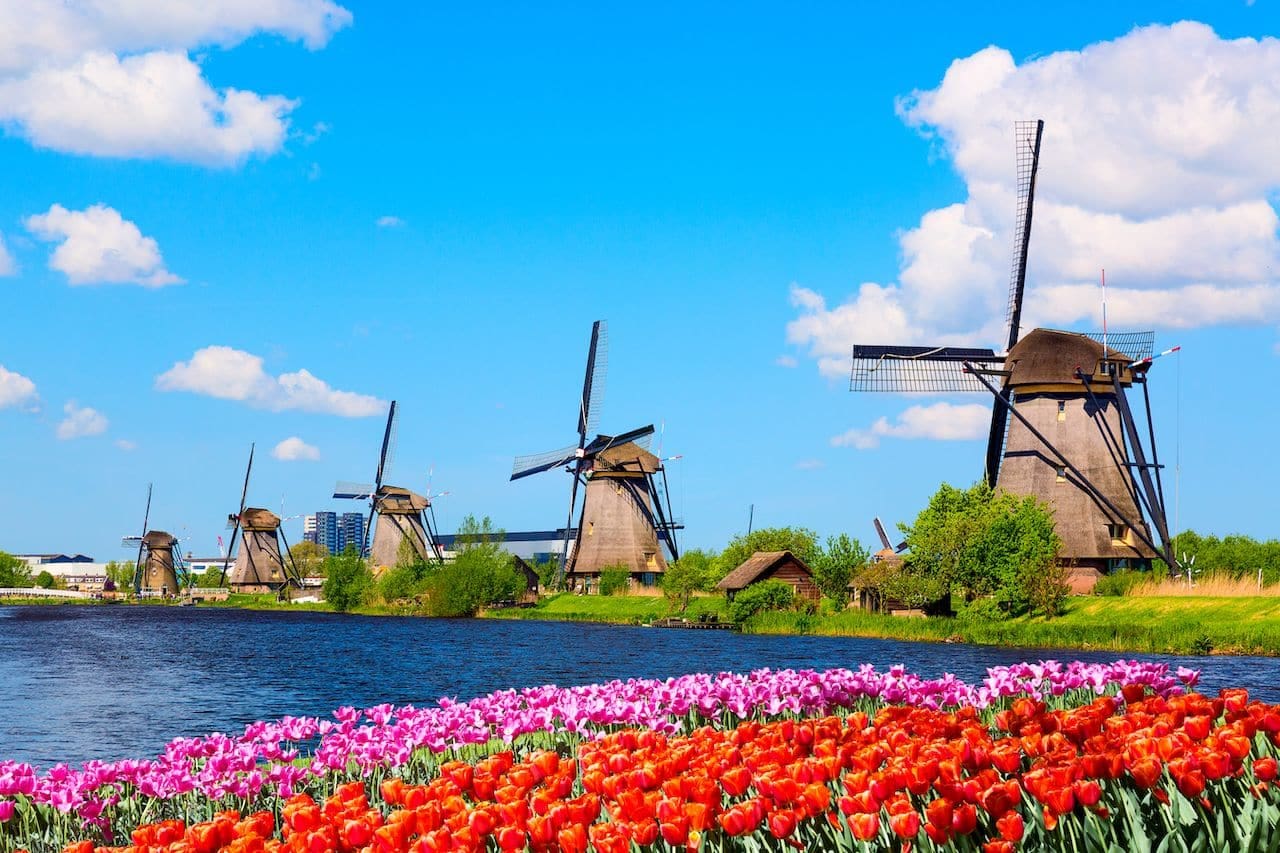
Photo: Nikolay Antonov/Shutterstock

Picture from the Netherlands going around social media, made with Artificial Intelligence
Similarly, we’ve seen countless images of Amsterdam’s canals lined with pink blossoms in spring, a picture-perfect scene straight out of a fairytale. Amsterdam does have very beautiful cherry blossom trees, they can be found in a different part of the city (check out the cherry blossom walk). Whilst these blossoms are pink, they are much more subtle in hue than the images that have the contrast turned up to max to create almost psychedelically vibrant colours. These heavily edited images set expectations that Amsterdam will greet visitors with a wash of bright colours, but this isn’t the case. Amsterdam, like nature itself, it much more charming without a filter.
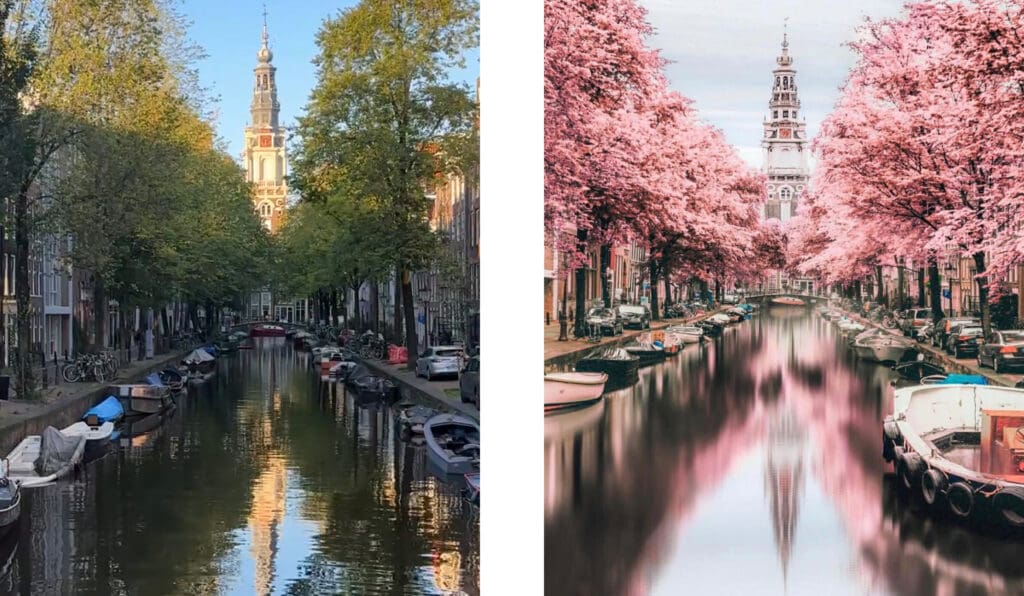
Real versus a fake version with pink blossoms
For many visitors, the disappointment is undeniable when they realise the places they’ve come to see aren’t as magical as the images promised. At Amsterdam Experiences, we pride ourselves on providing authentic, high-quality tours that show the Netherlands as it truly is, beautiful, historic, and full of charm, without the digital enhancements.
Our advice for travellers is simple: embrace the real beauty of the Netherlands. The windmills, tulip fields, and canals have their own charm, even if they don’t look exactly like the viral photos circulating online. By booking directly with local tour operators like us, you can get an authentic experience, guided by experts who know the true stories behind each location. Our guides can even help you find the perfect angle to create your own, genuine photographic memory of your trip.
In the age of AI and Photoshop, it’s important to remember that while some images may look “too good to be true,” they often are. But that doesn’t mean the real Netherlands is any less spectacular, it just offers a different kind of beauty, one rooted in history and authenticity.
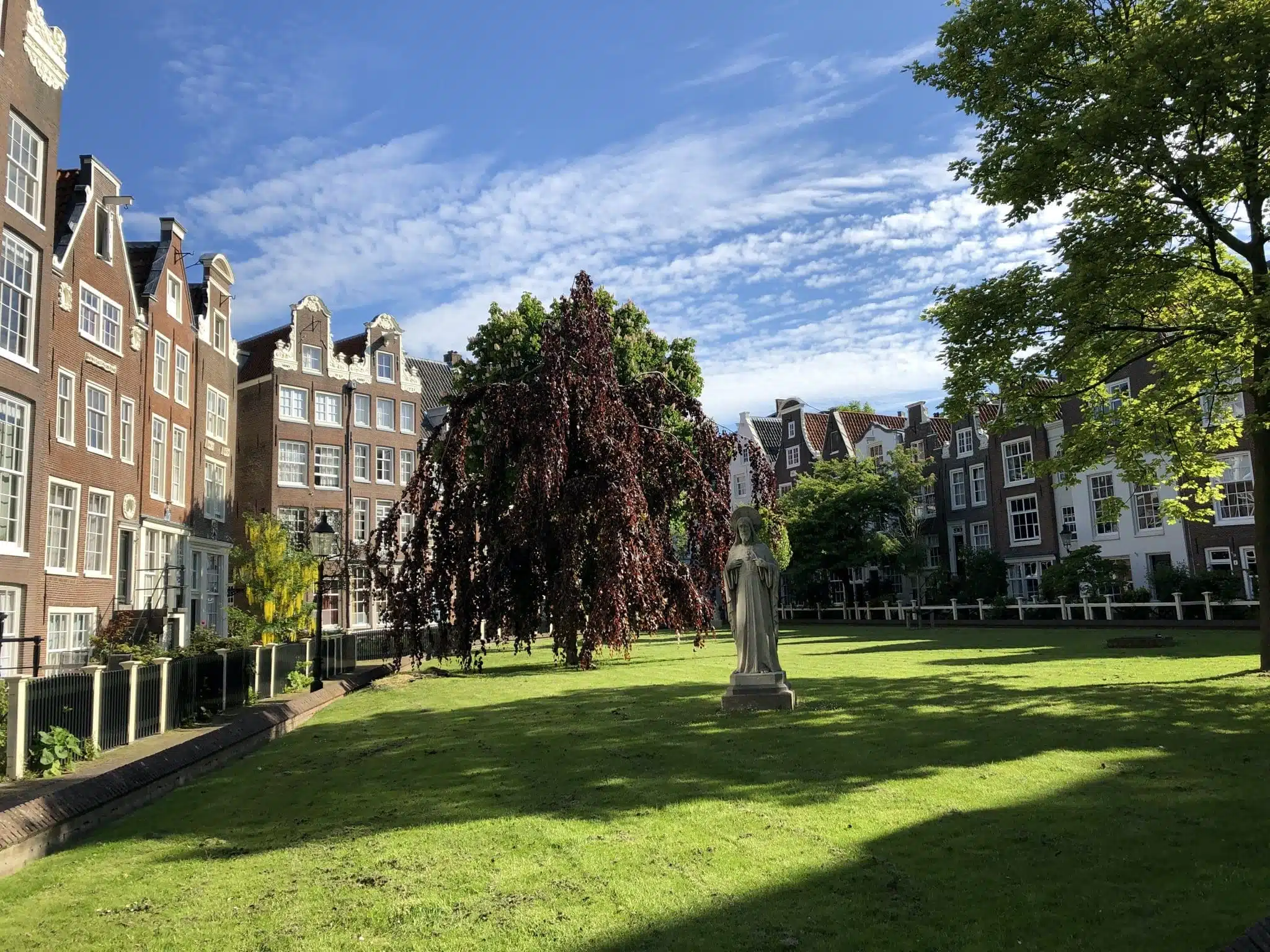
By managing expectations and staying informed, you can avoid disappointment and enjoy a genuine, unforgettable experience in our incredible country. And let’s end this blog with some real pictures taken on our tours.

No. Many images circulating of Amsterdam and the Dutch countryside are heavily manipulated, AI-generated, or composite images combining elements from different locations. Tulip fields next to windmills on canal banks, perfectly empty historic streets, and impossibly vibrant colours are common examples of unrealistic imagery. The Netherlands is genuinely picturesque, but the reality is different from the fantasy often presented on social media.
In spring, the Bollenstreek region between Haarlem and Leiden is covered in large, flat fields of tulips, hyacinths, and daffodils. These fields are commercial agricultural land and are viewed from the road rather than walked through. Windmills exist in the Netherlands but are not typically surrounded by tulip fields. The combination of windmill, canal, and tulip field in a single image is almost always artificial. The other half of the expectation gap is timing: the fields are only in colour for a few weeks and are cut as soon as the bulb has had what it needs, so a photograph taken in mid-April says nothing about what you will find in March or in May. Our tulip bloom calendar shows which flowers are realistically out on your own travel dates, region by region.
Follow local Dutch accounts and travel operators who post unedited, honest content. Look for images taken in real lighting conditions with real crowds. Read reviews from recent visitors. Booking with a local tour operator like Amsterdam Experiences means your guide will show you the genuine city rather than attempting to recreate an online fantasy. The real Amsterdam is more interesting than the AI version.
Amsterdam is one of the most photographed cities in Europe, with an instantly recognisable canal belt, historic architecture, and strong associations with tulips and cycling culture. This makes it a prime target for AI image generation and photo manipulation, as it has a strong visual identity that is easily exaggerated. The city is also extremely popular, meaning misleading imagery reaches huge audiences.
Yes. Travellers who arrive expecting scenes from AI videos often spend time searching for locations that don’t exist in the form shown, leading to frustration and missed genuine experiences. It also contributes to overtourism in a small number of hotspots while authentic and less-photographed areas of the city remain relatively undiscovered. Managing expectations with accurate information before travel leads to better experiences.