
The first tulips, Tulipa Sylvestris (wild tulip) originated in the mountains of Kazakhstan. These flowers were quite different from the tulips we are most familiar with today. The Ottoman’s discovered this wild flower as they expanded their empire across Asia, and took the tulip with them to Turkey.
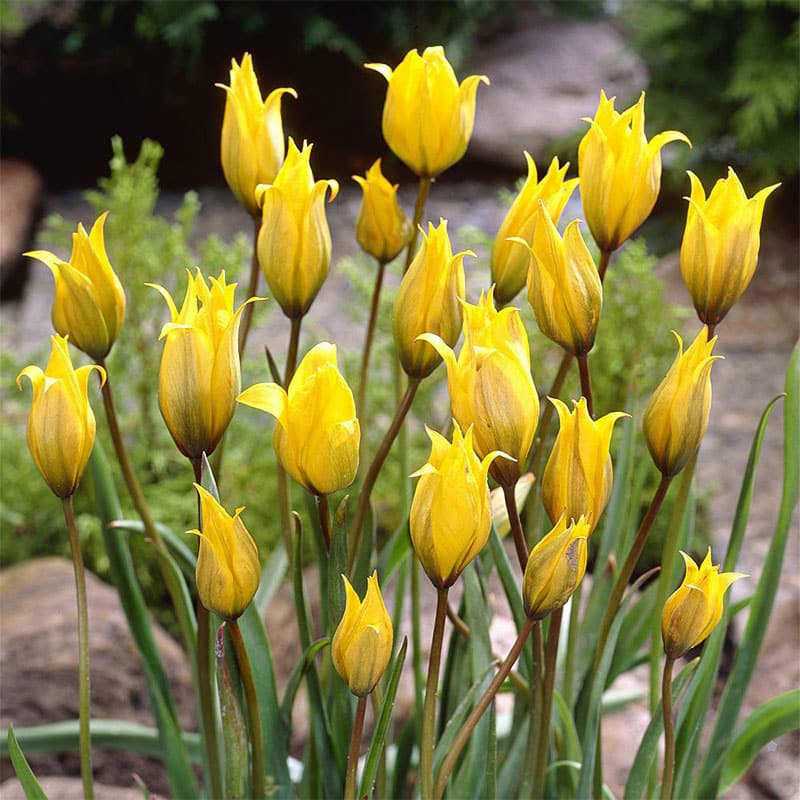
The flower was named tulip after the Persian word tulipan, meaning turban, due to the shape of the flower resembling a headdress. Turkish men wore a tulip in their turban as a symbol of wealth and social standing.

In the 16th century, Sultan Suleyman himself was such a fan of the flower. He filled his gardens with the colourful blooms and often gifted tulips to his guests. Soon, the gardens of the wealthiest and most influential people in Constantinople were filled with tulips, and the flower’s popularity quickly spread. One such guest was the Viennese ambassador, Ogier Ghiselin de Busbec, who was visiting Constantinople on ambassadorial duties. He brought the flowers back to Vienna and gave some to his good friend Carolus Clusius, who was in charge of the gardens of the Emperor of Austria.
When Clusius became head of the Hortus Botanicus Leiden in 1593, he took the tulip bulbs along with him. Whilst in Leiden, Clusius discovered that the sand-rich soil of the west of the Netherlands was perfect for the tulip to flourish, and he began expanding his collection via his network of friends across Europe.
Clusius was very protective of his flowers, which led to people breaking into the botanical gardens on many occasions to steal them.
The popularity of the tulip increased so much that by the start of the 17th century, tulip bulbs were being traded on the stock exchange. The demand for certain varieties of tulip bulbs was so high that it created a financial bubble. This is also known as ‘Tulipmania’ between 1634-1637. At its height, the most sought-after tulip bulb, Semper Augustus, cost the same price as a fully furnished canal house in the centre of Amsterdam, around 10,000 guilders.
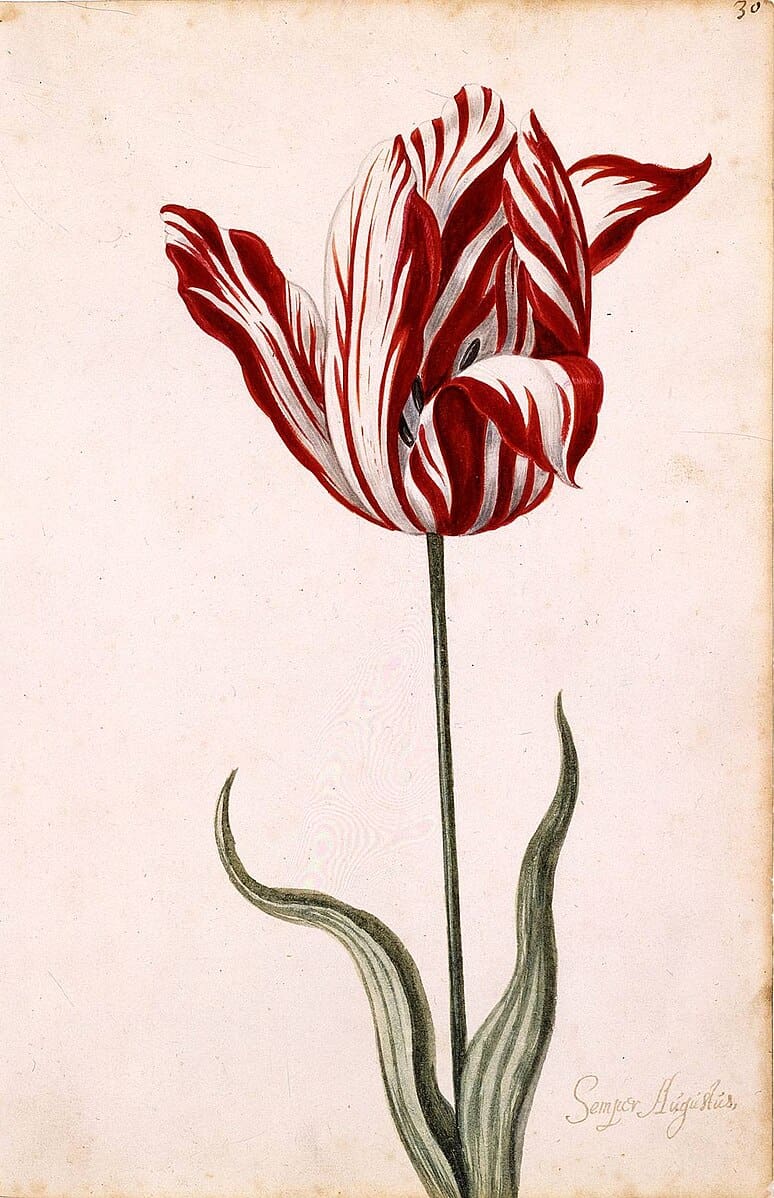
Incidentally, the bulb that was selling for the highest price was a ‘flame’ tulip. The colour on the flower was ‘cracked’ due to a disease within the bulb. This resulted in the unpredictability of the success of the bulb and how the flower would turn out, which raised the value of the bulb even more.
The tulip bubble burst in 1637, leaving many people bankrupt, but the Dutch passion for tulips has continued to this day. The first tulip fields were soon planted around Haarlem, and by 1700, the area now known as Bollenstreek was a flourishing flower-growing region.
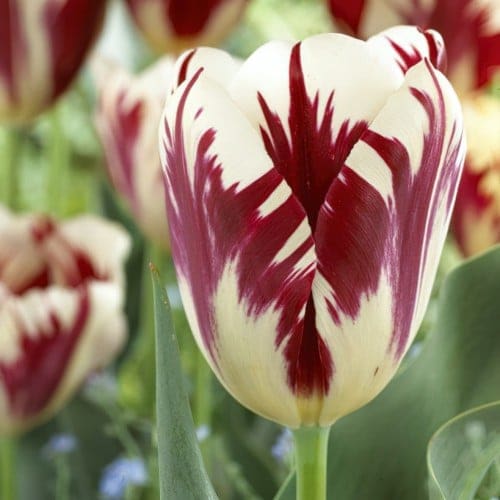
Today, there are many varieties of ‘flame’ tulips, such as the very popular ‘Rembrandt’ strain. These are now cultivated to achieve the pattern rather than carryingthe disease. Rembrandt never painted these tulips, but the strain is named after him as the rich colours resemble those he used in his art.
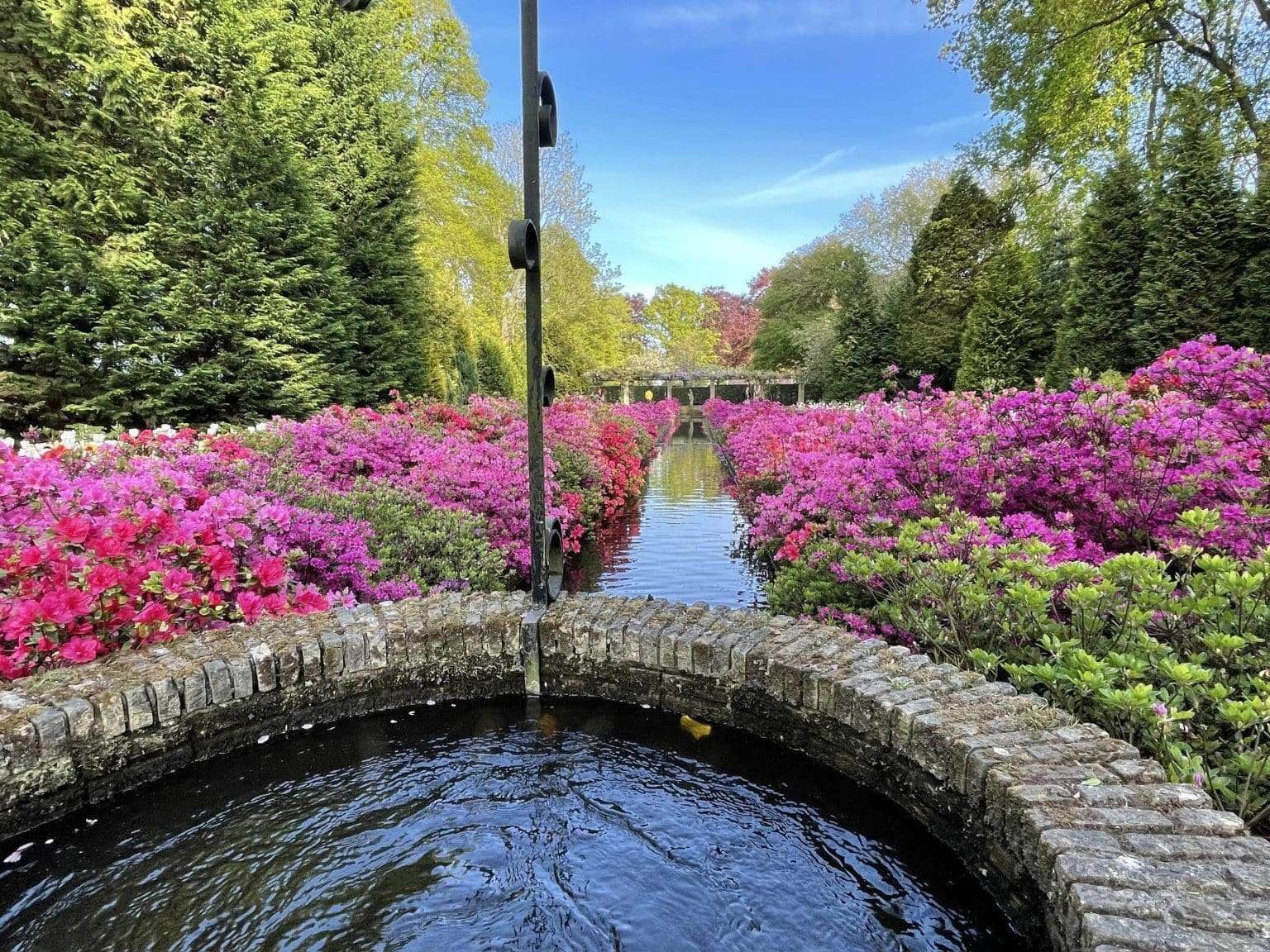
Tulip season runs from mid-March to mid-May, and the key dates to be aware of are when Keukenhof Gardens is open, which in 2027 is 18th March to 9th May. The flowers are unpredictable and susceptible to the weather, so it is not always possible to guarantee that there will be tulips either at the start or end of the season. April is the best time to visit if you want to be certain to see the amazing colourful tapestry of flowers in the fields and gardens of the growing region.
Here are our suggestions for the highlights you will discover when you visit Keukenhof in 2027.
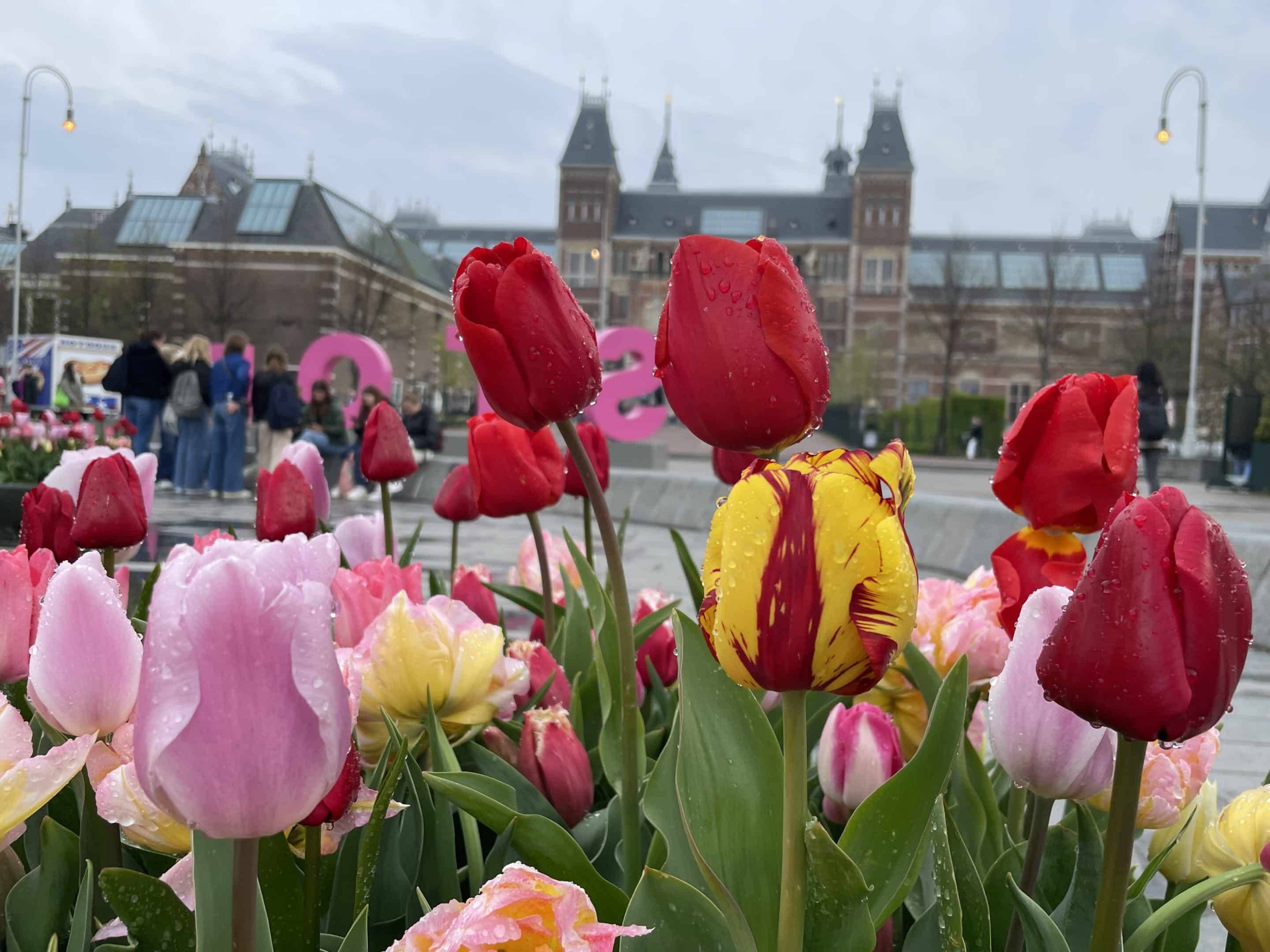
Amsterdam also has a Tulip Festival throughout April. More than 900.000 tulips are planted throughout the city, that’s one for every resident. These tulips are very accessible as they are located in many of the popular locations and sites around the city.
*One point to note
If you see photographs of windmills and tulips together, more often than not, these are fake photographs. The ground around the windmills in Zaanse Schans and Kinderdijk, for example, is not suitable for growing tulips. So we will end this blog with a fake image. To find out more about how fake images are misleading visitors to the Netherlands, check out our blog.
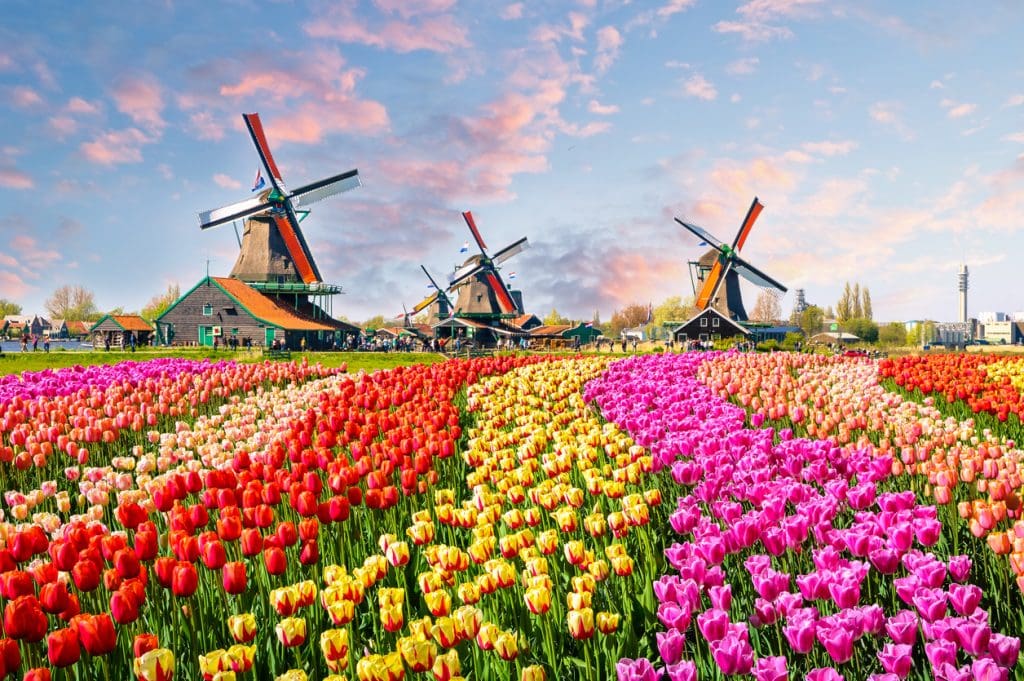
To see the landscapes that gave rise to the tulip trade (the windmills, the bulb fields and the traditional Dutch villages), our private windmill and Dutch villages tour is a full-day journey through some of the most iconic countryside in the Netherlands.
And if you would like to see those famous blooms for yourself, our guide to the tulip fields near Amsterdam explains where and when to find them each spring.
Tulips are native to Central Asia and the mountainous regions stretching from Turkey through Iran to China. They were cultivated in the Ottoman Empire long before they reached Europe, and it was through Ottoman trade routes that the tulip arrived in the Netherlands in the late sixteenth century. The botanist Carolus Clusius introduced tulips to the Netherlands around 1593 when he planted bulbs at Leiden University.
The Netherlands became the centre of tulip cultivation in the seventeenth century due to a combination of its fertile sandy soils, a climate suited to bulb growing, and the entrepreneurial trading culture of the Dutch Golden Age. Dutch growers developed thousands of new varieties through selective breeding and today the Netherlands produces approximately 80 percent of the world’s commercially grown tulip bulbs.
Tulip Mania was a period in the 1630s when speculation in tulip bulb futures reached extraordinary heights in the Dutch Republic. At its peak, single bulbs of the most sought-after varieties changed hands for prices equivalent to a skilled craftsman’s annual wage. The market collapsed suddenly in February 1637, and Tulip Mania is often cited as one of the first recorded speculative financial bubbles in history.
Tulips in the Netherlands typically bloom between mid-March and mid-May, with the peak usually falling in the second and third weeks of April. The exact timing varies each year depending on the winter temperature and the spring warmth. The Keukenhof Gardens, the largest flower garden in the world, is open from mid-March to mid-May and provides a reliable way to see tulips at their best.
The Bollenstreek (Bulb Region) between Leiden and Haarlem is the heart of Dutch tulip country. The fields around Lisse, Hillegom, and Noordwijkerhout are striped with vivid colour in spring. Driving or cycling the Bollenstreek in April is one of the great Dutch experiences. The Keukenhof Gardens near Lisse provide a curated garden experience, while the open fields offer the classic painted-landscape view.
No. The tulip fields are working agricultural land and it is not permitted to enter or pick flowers from them. The bulbs are the commercially valuable product, and the flowers are often deliberately cut early in the season to direct the plant’s energy back into bulb development. Visitors should admire the fields from the road or from designated viewing areas. Keukenhof Gardens and specialist flower farms offer legitimate picking experiences.
Wondering when the tulips bloom today, four centuries after Clusius? Our tulip bloom calendar shows the season against your own travel dates.