
Among the many stories of courage to emerge from the Netherlands during the Second World War, few are as remarkable as that of Hannie Schaft. Known as “The Girl with the Red Hair,” she became one of the Dutch Resistance’s most celebrated members, carrying out dangerous missions against the German occupation while still in her early twenties.
Working alongside sisters Freddie and Truus Oversteegen, Hannie became part of one of the Resistance’s most effective and daring teams. Together, the three young women carried out missions that few could have imagined, risking capture and certain execution every time they left home.
Their story is one of extraordinary courage, impossible choices, and unwavering conviction. More than eighty years after the liberation of the Netherlands, Hannie remains one of the country’s most enduring symbols of resistance, while the remarkable contribution of the Oversteegen sisters is finally receiving the recognition it deserves.
Born Jannetje Johanna Schaft on 16 September 1920 in Haarlem, Hannie grew up in a politically aware family that valued equality and justice. She later moved to Amsterdam to study law at the University of Amsterdam.
When Germany invaded the Netherlands in May 1940, everyday life changed dramatically. As anti-Jewish measures became increasingly severe, Hannie refused to accept the occupation. Her decision to help Jewish friends and classmates eventually led her to join the Dutch Resistance. When she refused to sign the Nazi loyalty declaration required to continue her studies, she was expelled from university. Rather than stepping back, she became even more involved in resistance work.
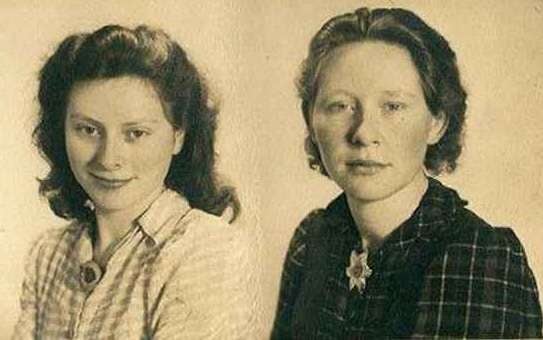
As Hannie’s role within the Resistance grew, she began working closely with sisters Freddie and Truus Oversteegen. Together, the three young women became one of the Dutch Resistance’s most effective and feared resistance cells.
Like Hannie, the Oversteegen sisters were exceptionally young when they joined the Resistance. Freddie was just fourteen years old when she began helping to distribute illegal newspapers and assist those fleeing persecution. As the occupation intensified, the sisters’ work became increasingly dangerous, eventually leading them into sabotage and armed operations. Perhaps what makes Hannie and the Oversteegen sisters’ story so remarkable is that they were not trained soldiers or intelligence officers. They were ordinary young women who found themselves making extraordinary decisions under unimaginable circumstances.
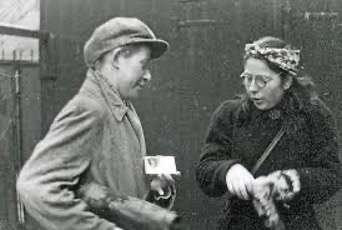
When Freddie and Truus Oversteegen first joined the Resistance, they were often used as decoys rather than gunwomen. Their youth and appearance allowed them to approach German soldiers and Dutch collaborators without arousing suspicion. Their role was to strike up a conversation, flirt if necessary, and persuade the target to walk to a quieter location, where waiting resistance fighters would carry out the assassination.
In practice, these operations did not always go according to plan. Delays or miscommunication sometimes meant the women were left alone with their targets for far longer than expected, forcing them to improvise while trying not to arouse suspicion. Relying on others also increased the risk that the operation would fail or that they themselves would be discovered.
As the war progressed, Hannie Schaft and the Oversteegen sisters became increasingly self-reliant. Rather than acting solely as decoys, they began carrying weapons and taking part directly in the executions themselves. They also forged identity documents, smuggled weapons, escorted Jewish children and adults into hiding, gathered intelligence, sabotaged infrastructure, and carried out attacks against German occupiers and Dutch collaborators.
Exactly how many people Hannie and the Oversteegen sisters killed has never been established. The women rarely discussed their wartime actions, and many resistance records were deliberately destroyed or never kept. When Truus Oversteegen was later asked how many people she had killed during the war, she simply replied, “One should not ask a soldier any of that.” It remains one of the most powerful reflections on the price paid by those who fought in the Dutch Resistance.
Hannie quickly became one of the most wanted members of the Dutch Resistance. Her distinctive red hair made her easy to recognise, earning her the nickname “The Girl with the Red Hair.” To reduce the risk of being identified, she later dyed her hair black, although the nickname remained.
Ironically, one of Hannie’s greatest advantages was that she looked entirely unthreatening. Like the Oversteegen sisters, she understood that her appearance could be used to the Resistance’s advantage. She reportedly joked that she never left home without “putting her face on”, recognising that something as ordinary as applying make-up could help her gain the confidence of those she was targeting. Throughout the occupation she lived under false identities, constantly aware that capture could mean torture or execution.
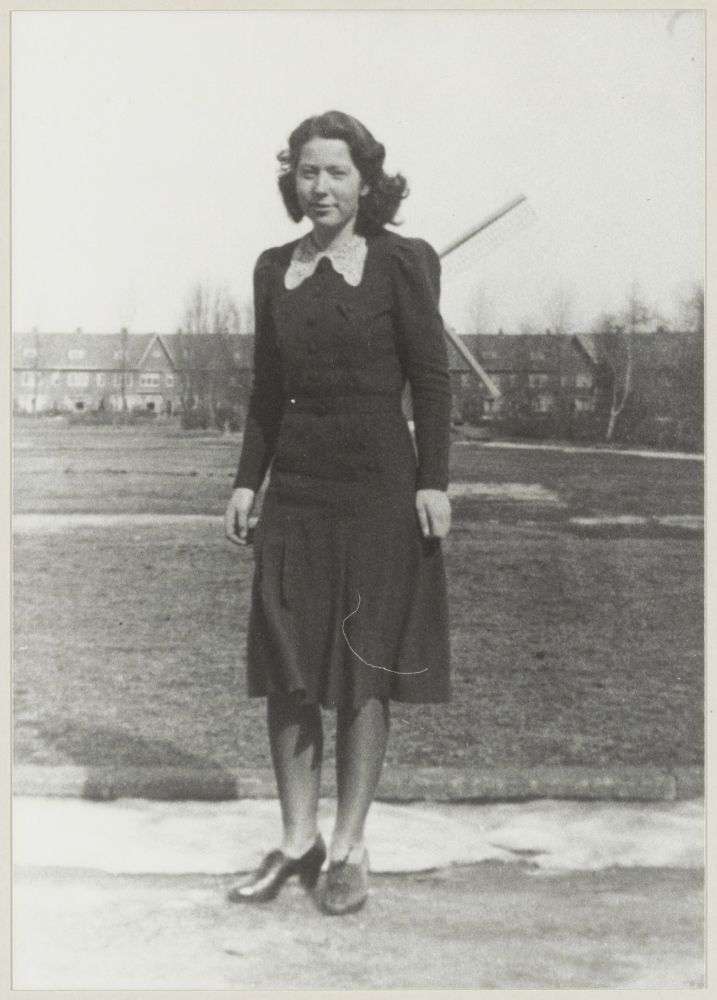
By the spring of 1945, the Second World War was drawing to a close. Allied forces were advancing, and the liberation of the Netherlands was only weeks away. On 21 March 1945, Hannie was stopped at a German checkpoint near Haarlem while carrying illegal newspapers and a pistol concealed beneath her bicycle. Although she initially managed to avoid immediate arrest, a routine search uncovered her weapon and false identity papers.
She was taken to the former Havenstraat prison in Amsterdam, where she was interrogated by the German Sicherheitsdienst. Despite repeated questioning, she refused to betray her fellow resistance members or reveal information about the Resistance.
Less than three weeks before the liberation of Haarlem, Hannie was taken to the dunes near Bloemendaal on 17 April 1945.
She was executed by two German officers. According to later accounts, the first shot failed to kill her. Hannie is said to have looked at her executioners and remarked, “I shoot better.” One of the officers then fired a second shot, killing her. She was just twenty-four years old. Only eighteen days later, Haarlem was liberated by Canadian forces.

After the war, Hannie Schaft was reinterred at the Erebegraafplaats Bloemendaal (Bloemendaal Honour Cemetery), where many members of the Dutch Resistance are buried. Her grave occupies a unique place in Dutch remembrance.
Hannie was the first person to be buried in the cemetery, and she remains the only woman laid to rest there. Her grave sits prominently at the heart of the cemetery and forms the focal point of the annual remembrance ceremony held every November.
Each year, veterans, officials, schoolchildren, and members of the public gather to honour Hannie and all those who gave their lives in the Dutch Resistance. The ceremony ensures that her sacrifice, and the values for which she fought, continue to be remembered by new generations.
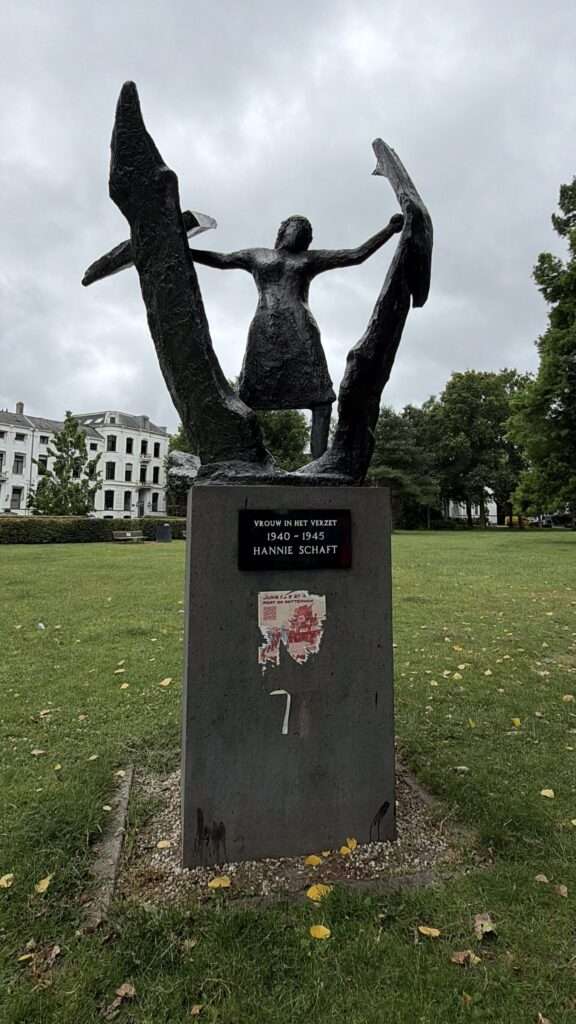
Visitors to Haarlem can also see the Hannie Schaft memorial statue, which stands as a lasting tribute to her courage and determination. The memorial has become an important place of remembrance, with flowers regularly laid in her honour. Together with her grave at Bloemendaal, it serves as a powerful reminder of the extraordinary role that one young woman played in resisting the Nazi occupation.

Another important place connected with Hannie’s story can be found in Amsterdam at the former Havenstraat prison, where she was held following her arrest. Today, the building has been transformed into the British School of Amsterdam.
Although it has never been possible to determine exactly which cell Hannie occupied, the school has chosen to preserve one of the prison cells as a place of reflection and education. Rather than hiding the building’s difficult past, it encourages pupils to learn about Hannie Schaft, the Dutch Resistance, and the importance of freedom, democracy, and standing up to injustice.
There is perhaps no more fitting tribute. A building once used to imprison those who stood against tyranny now echoes with the voices of children learning, questioning, and growing up in freedom. Although the preserved cell cannot be identified as Hannie’s, it stands as a memorial to her sacrifice and to the countless others who passed through its doors during one of Europe’s darkest chapters.
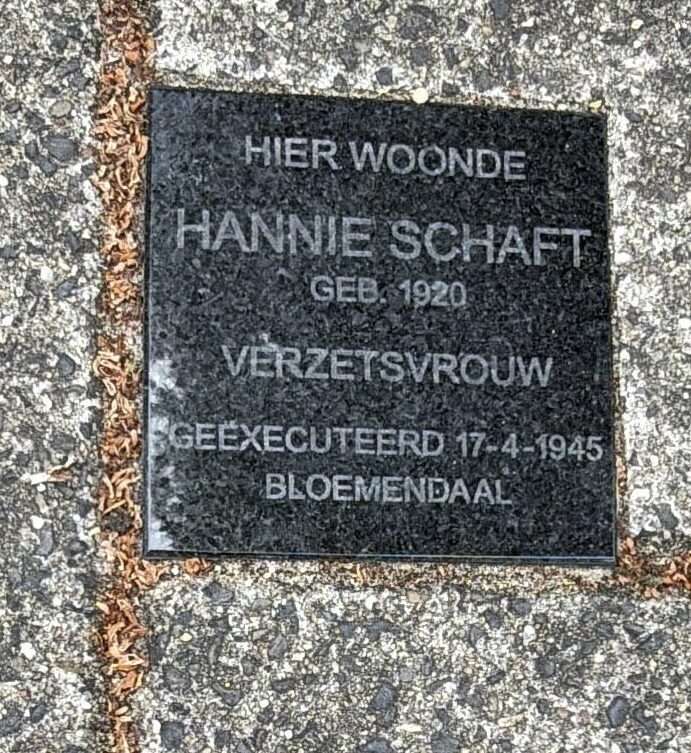
Following the war, Hannie Schaft came to be regarded as the symbol of the Dutch Resistance. Her courage, determination, and ultimate sacrifice made her one of the Netherlands’ most recognisable wartime heroes. Although Hannie Schaft lived for only twenty-four years, her story continues to inspire new generations more than eighty years after her death.
Her story cannot be told without also recognising Freddie and Truus Oversteegen. Together, the three young women carried out some of the Dutch Resistance’s most dangerous missions, risking capture and certain execution every time they left home. They were students, sisters, daughters, and friends who found themselves living through extraordinary times. Faced with impossible choices, they chose to resist.
Today, Hannie’s name appears on streets, schools, memorials, and monuments throughout the Netherlands. Yet perhaps the most powerful reminder of her legacy remains her grave at the Erebegraafplaats Bloemendaal. As the cemetery’s first burial and its only female resident, it stands not only as a memorial to Hannie herself, but as a symbol of the courage, sacrifice, and resilience of everyone who fought for the freedom of the Netherlands.
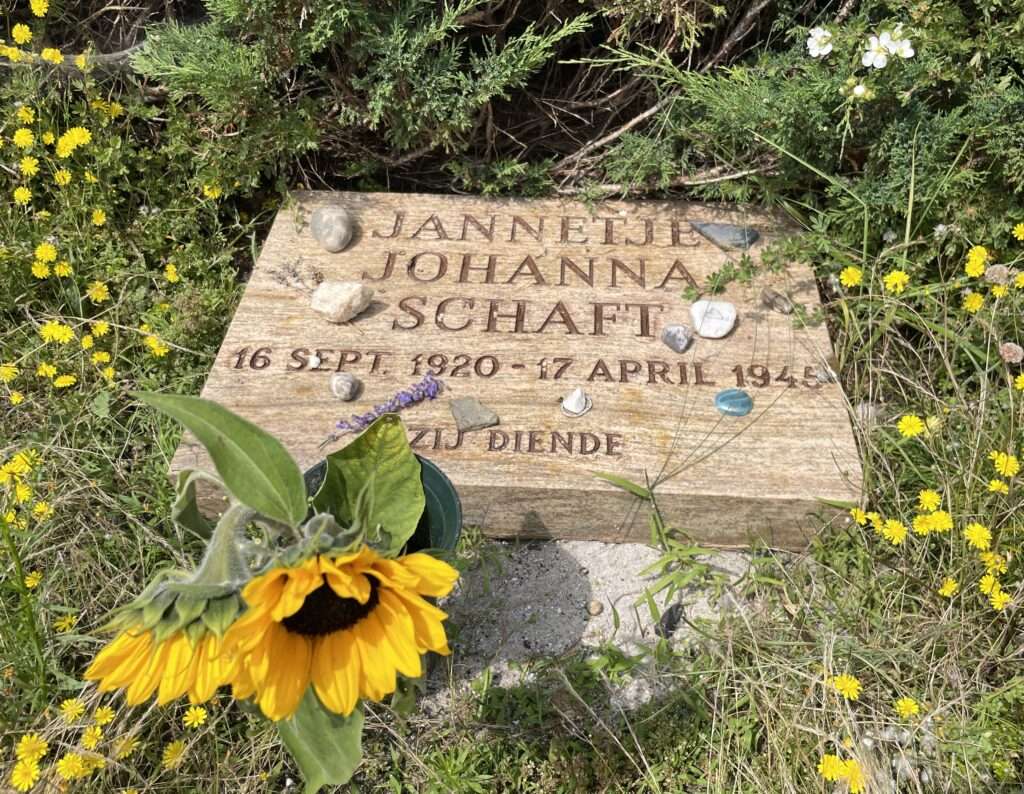
Hannie Schaft was a Dutch Resistance fighter during the Second World War. Known as “The Girl with the Red Hair,” she became one of the Netherlands’ most celebrated resistance heroes.
Hannie became known as “The Girl with the Red Hair” because of her distinctive red hair, which made her easily recognisable. As her resistance activities increased, she dyed it black to reduce the risk of being identified, although the nickname remained.
Freddie and Truus Oversteegen were teenage resistance fighters who worked closely with Hannie Schaft. Together, they formed one of the Dutch Resistance’s most effective teams.
They forged identity papers, smuggled weapons, hid Jewish people, gathered intelligence, carried out sabotage, and took part in armed attacks against German occupiers and collaborators.
She was arrested at a German checkpoint near Haarlem in March 1945 after a weapon and false identity papers were discovered during a search. She was executed by German officers on 17 April 1945, just weeks before the liberation of Haarlem.
She is buried at the Erebegraafplaats Bloemendaal Honour Cemetery near Haarlem, where she was the first person interred and remains the cemetery’s only female burial.
Hannie Schaft is remembered for her courage, her work in the Dutch Resistance, and her sacrifice in the fight against Nazi occupation. Annual commemorations continue to honour her legacy at her grave every November.