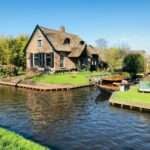
The easiest windmills to see from Amsterdam are at Zaanse Schans, about 25 minutes from the city, where historic windmills stand in a row and several are open to visitors. Inside Amsterdam you can see De Gooyer and visit Molen van Sloten, and Kinderdijk, the most famous windmill landscape in the Netherlands, is about 1 hour 15 minutes away. See the full list below.
Last updated: 28 September 2026
When you think of the Netherlands, what is the first thing that comes to your mind? If you say, Windmills, you would not be the only one. For hundreds of years, windmills have been used by the Dutch (its oldest dating from 1450), and they have now become iconic to the Dutch landscape. Here are some interesting facts about the windmills of the Netherlands.
Windmills, or molens in Dutch, used to be everywhere in the Netherlands. At one point, over 10,000 pumps were spread across the country. Nowadays, only 991 windmills, 397 drainage mills and 594 industrial and corn mills have remained.
When steam power started gaining popularity at the start of the industrial revolution, it was only a matter of time until windmills were replaced with steam-powered pumps. The rest of them were either ruined during World War II, or they became dilapidated overtime.

The windmills used wind energy and turned it into rotation energy. This energy was then used for many tasks, such as pumping water, grinding materials, or to produce electricity.
By harnessing the power of wind and water, the mills pounded, shredded, grinded, or mixed various types of raw materials to obtain a product.
The Zaanstreek paper mills once produced a world-renowned quality paper. It actually made the sheets on which the American Declaration of Independence was printed on.
Mills were used to process almost anything: mustard, hemp, grain, cocoa, oil, chalk, paint or saw. As mills could quickly make planks for shipbuilding, it is no wonder the Netherlands rose as a powerful maritime nation.
Amsterdam actually housed the first industrial estate in the world which consisted of 23 sawmills on Kostenverlorenkade. One of these mills, called the Otter, still exists even to this day.
During Holland’s history, windmills had many purposes. But the most important was probably that of pumping water to drain the lowlands and return it into the rivers over the dikes to create farmable land. In the fourteenth century, a type of mill which had its post hollow was used to drive scoop wheels in order to remove the water from the wetlands. The mills were also used to keep the water from flooding the existing drylands.
The mills in the Zaanstreek region (just north of Amsterdam) provided sawed wood used for making the country’s shipbuilding industry blossom. This resulted in the world’s first genuine industrial zone. By the middle of the 17thcentury, Zandam produced over 75 ships annually. Even Russia’s Tsar, Peter the Great, came to Zaandam to see how ships were made.
You do not have to go far from Amsterdam to see windmills. There are two in the city itself, and some of the best windmill landscapes in the country are less than an hour away. At several of them you can go inside and see how a mill works.
| Where | From central Amsterdam | What you see |
|---|---|---|
| In Amsterdam: De Gooyer | In the city, east of the centre | A landmark windmill beside the Brouwerij ’t IJ brewery. You see it from outside. |
| In Amsterdam: Molen van Sloten | West Amsterdam | A museum windmill you can go inside. |
| Zaanse Schans | About 25 minutes by car | Historic working windmills in a row, several open to visitors. See Zaanse Schans. |
| Haarlem: Molen De Adriaan | About 25 minutes by car | A museum windmill on the River Spaarne. See Haarlem. |
| Leiden: Molen De Valk | About 35 minutes by car | A museum windmill in the city centre. See Leiden. |
| Kinderdijk | About 1 hour 15 minutes by car | 19 windmills, a UNESCO World Heritage Site. See Kinderdijk. |
The windmills are worth a visit in every season, and the mood changes with the months. Summer brings the longest days and the liveliest atmosphere, but also the most visitors, so Kinderdijk is best reached before 10am or after 3pm. Spring and autumn are noticeably quieter, with moderate temperatures, and the morning light falling across the sails from the east is ideal for photographs. In winter, Kinderdijk is almost deserted. The surrounding site can be explored on foot at any time of year, although opening times for the visitor mills and museum change with the seasons, so check the official Kinderdijk website before you set off.
Short on time? Our 4-hour private Zaanse Schans tour from Amsterdam covers the windmills, cheese and clogs. On our Private Zaanse Schans Windmill and Dutch Villages Tour you visit the windmills of Zaanse Schans and the countryside villages north of Amsterdam. In spring, our Private Windmill and Tulips Tour combines windmills with the flower fields.
The sails of a windmill could be positioned in order to send messages, such as the death of a loved one, festive events like a wedding or a birth, periods of inactivity or to call someone over to the mill as fast as they could. During World War II, sails were also used to warn the locals if the Nazis were coming.

Windmills did not only influence the evolution of the Dutch nation, but their language as well. There are several expressions with pumps, such as: Met molentjes lopen (walking with windmills) and A klap van de molen hebben (to be hit by a mill) both meaning to be a little crazy. The saying Alle molenaars zijn geen dieven (not all millers are thieves) suggests that some millers might have been less than honorable.
During the 17th and 18th centuries, windmills became a popular motif in many Dutch landscape paintings. Famous Dutch artist Rembrandt, which was the son of a miller from Leiden, painted a powerful scene depicting a windmill. Besides a broad moat, the windmill stands tall over the landscape. The last rays of the sun give its sails a radiant glow as a dark, ominous cloud.
17th-century paintings that depicted windmills meant more than just a picture that looked nice. They were the nation’s symbol of strength, security, and resilience. They were responsible for keeping the soil dry and helped the people in making the food and items they needed. According to the experts at the National Gallery of Art, Washington, Rembrandt’s mill represents the quiet aftermath that settled after the Dutch fought for their independence from Spain.
in 1871, French impressionist painter Claude Monet visited the village of Zaandam, the scenic little town situated near Amsterdam. While there, he painted 24 illustrations of the surrounding views. He was very impressed with the beauty of Amsterdam’s houses and windmills, mentioning, in a letter to his friend, Camille Pissarro, that: There is enough here to paint for an entire lifetime.
Monet’s painting Windmills near Zaandam shows pumps that look like they have been painted from a boat out on the water. Their orange sails contrast against the grey Dutch sky. He used a limited range of colours to mimic the style of contemporary Netherlandish landscape painters and to best convey the dreary atmosphere. When Van Gogh saw Monet’s paintings in Paris, he was very impressed with his work.
If you’re visiting Amsterdam or any other place in the Netherlands, do not miss the chance to visit at least one windmill, maybe in our famous
The best way to experience the windmills of the Netherlands is alongside a private guide who can take you into the landscape beyond the tourist sites. Our private windmill and Dutch villages tour is a full-day journey through traditional villages, working mills and the timeless Dutch countryside that shaped a nation.
There are currently 991 windmills remaining in the Netherlands: 397 drainage mills and 594 industrial and corn mills. At their peak, over 10,000 windmills were spread across the country. Many were replaced during the industrial revolution and others were lost or damaged during World War II.
Dutch windmills served many purposes. Drainage mills pumped water out of low-lying polders to keep the land habitable and farmable, essential in a country largely below sea level. Industrial mills ground grain, sawed timber, pressed oil from seeds, and manufactured paper. Without windmills, much of the Netherlands would be underwater.
Zaanse Schans, about 25 minutes from Amsterdam, is the most popular windmill destination, with historic working windmills in a traditional Dutch landscape. Kinderdijk, a UNESCO World Heritage Site with 19 windmills, is about 1 hour 15 minutes away and is considered the finest windmill landscape in the Netherlands. In Amsterdam itself you can see De Gooyer and visit Molen van Sloten.
Some traditional windmills are still operational, used for grinding grain, sawing wood, or maintaining local water levels. They are also major heritage attractions. Dutch law requires working windmills to have a resident miller, so some millers still live inside these historic structures today.
Yes, many historic windmills are open to visitors. At Zaanse Schans you can enter working windmills and see the machinery in operation. The oldest surviving windmill in the Netherlands dates from 1450, and visiting one gives a vivid sense of how central these structures were to Dutch life and landscape for centuries.
Windmills were the original engine of Dutch water management, pumping water from low-lying polders into drainage canals and keeping reclaimed land dry. This technology allowed the Dutch to create and inhabit land that is naturally below sea level. The windmill is therefore not just an icon but the foundation on which the Netherlands was literally built.
Zaanse Schans is worth visiting all year, but late spring to early autumn (May to September) gives you the best chance of seeing the mills actually turning, as most working mills open daily during this period. It is also the busiest season, so arrive before 10am or come on a weekday to stay ahead of the tour groups, which peak between roughly 11am and 4pm. If you prefer a quieter, more atmospheric visit, October and the winter months see far fewer crowds, though some mills close or reduce their opening hours off-season, so check ahead before you go. If you are timing a visit around the flowers as well as the mills, our tulip bloom calendar shows which flowers are out week by week, and which of the three bulb regions is furthest along.